Culture & Traditions
Hospitality is not a gesture here — it is the structure
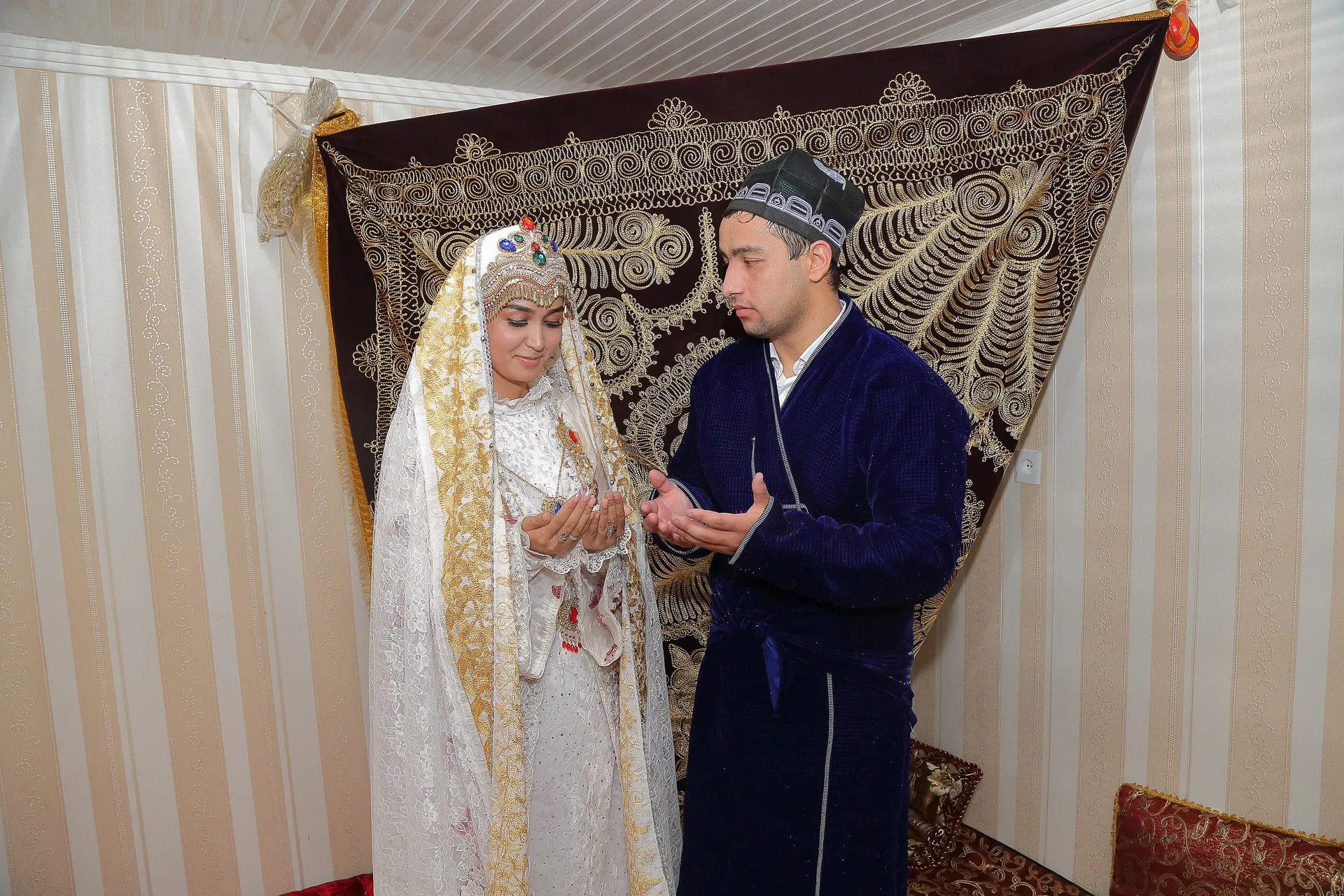
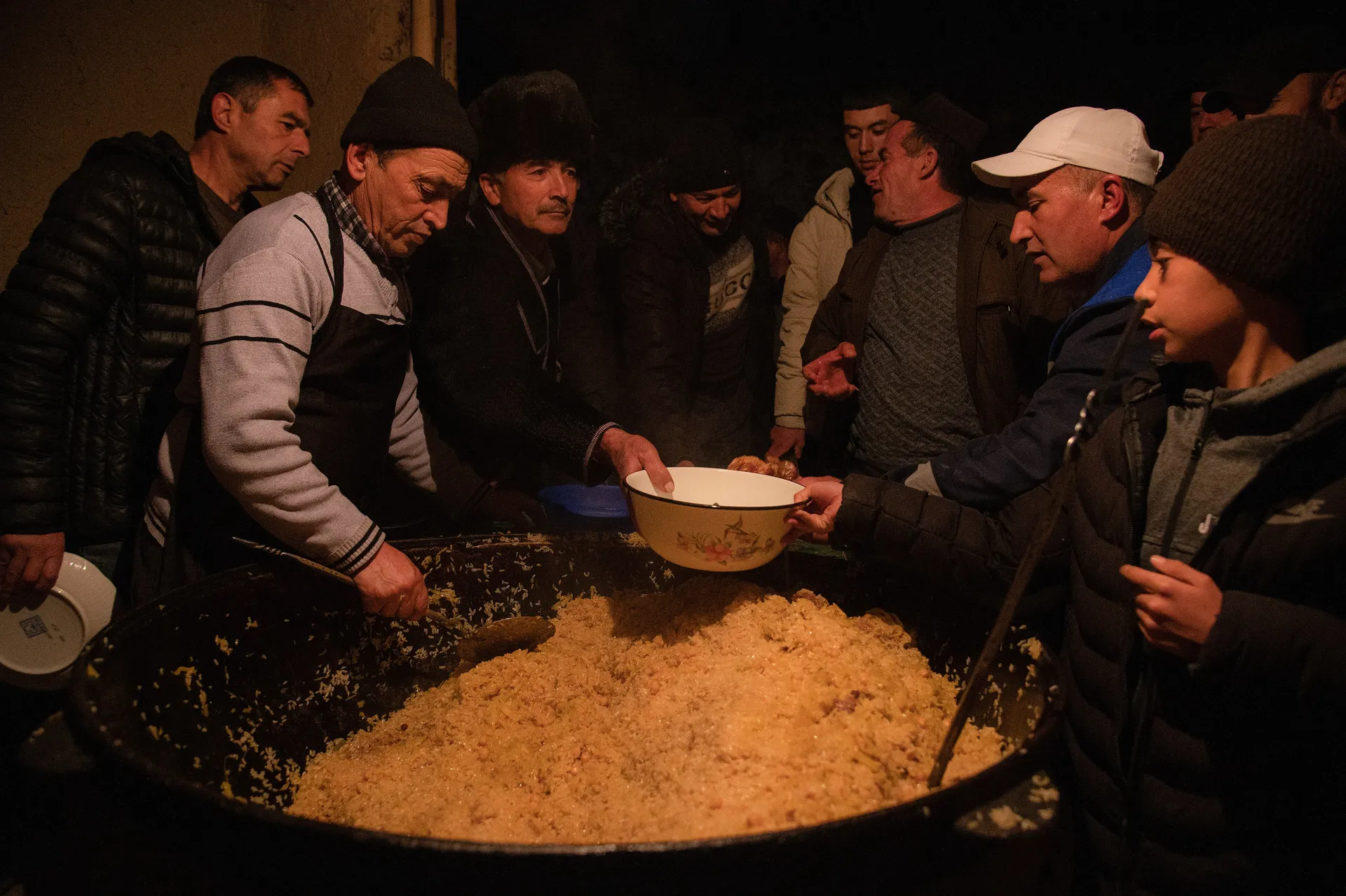
Uzbek social life is organised around the mahalla — the neighbourhood, which is also a legally recognised unit of local self-government. It arranges weddings, mediates disputes, and notices when someone stops leaving the house.
Suzani

The rules of the table
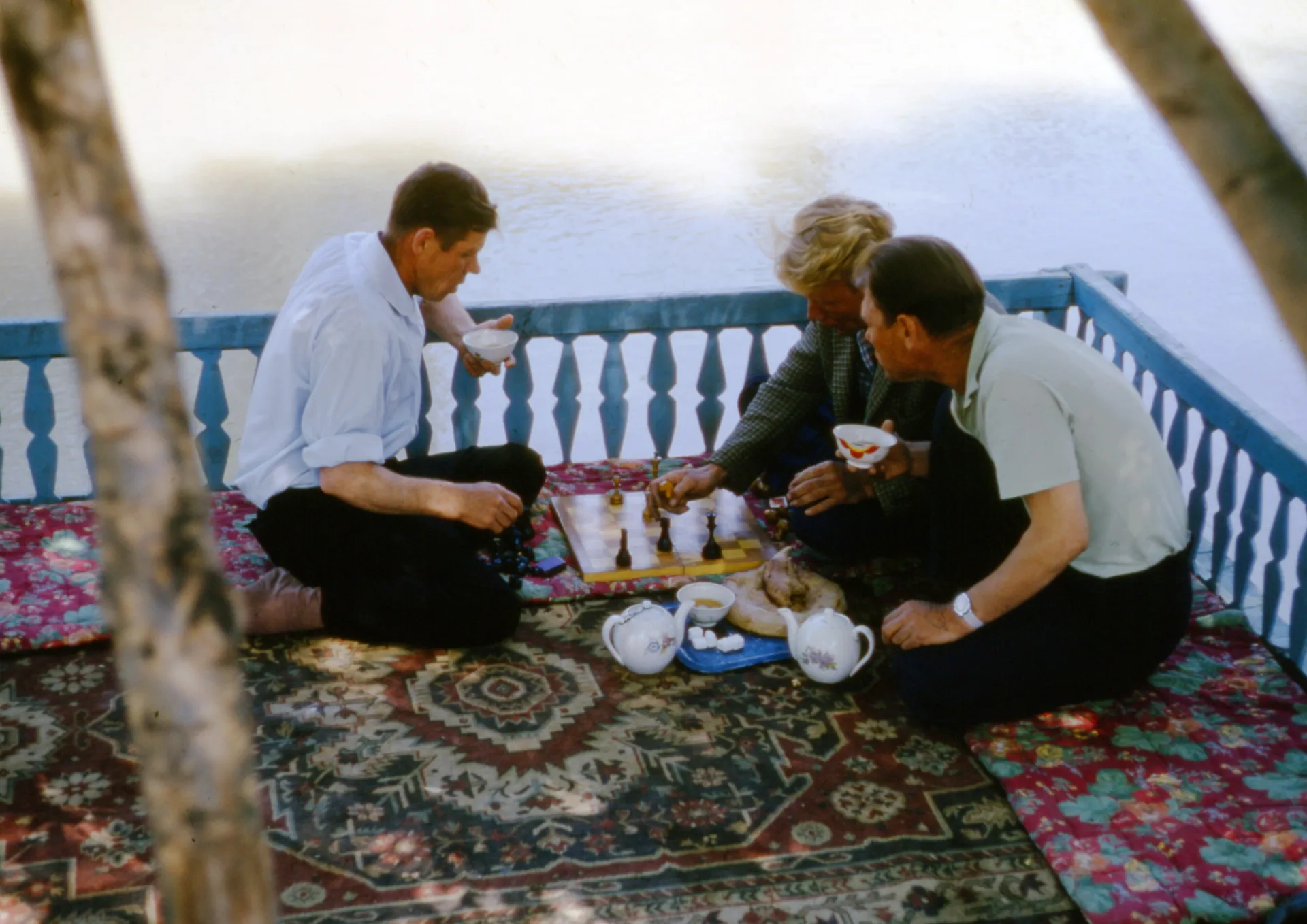
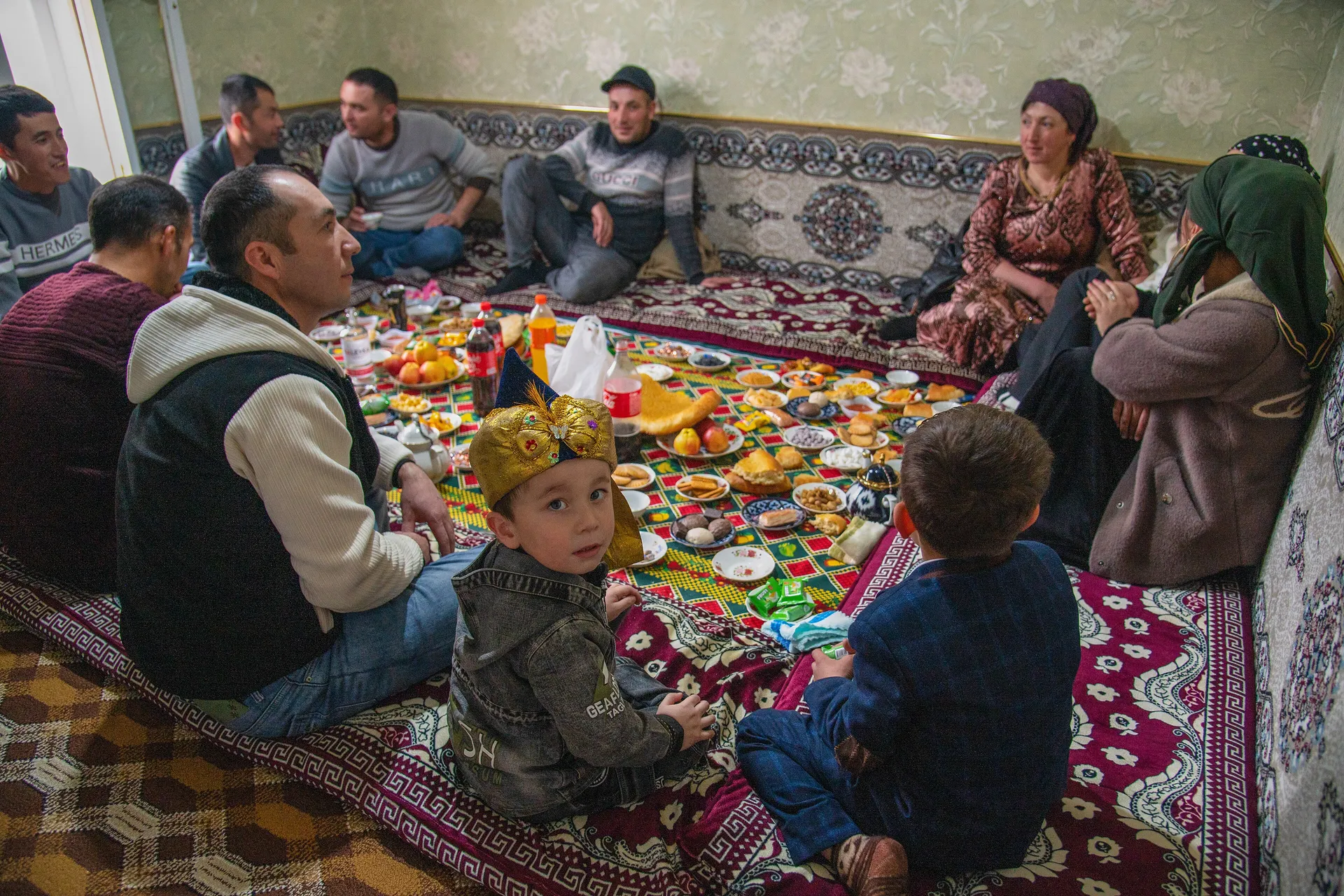
Bread is torn, never cut, and never set face-down. Tea is poured into the guest's bowl and returned to the pot three times before serving — the ritual is called qaytarma, and it aerates and evens the brew. The cup is filled only a third full: a full cup would suggest the host wants you to leave. Refusing food outright is difficult; the polite move is to accept, taste, and slow down. Guests are seated furthest from the door.
Cloth, calendar and craft
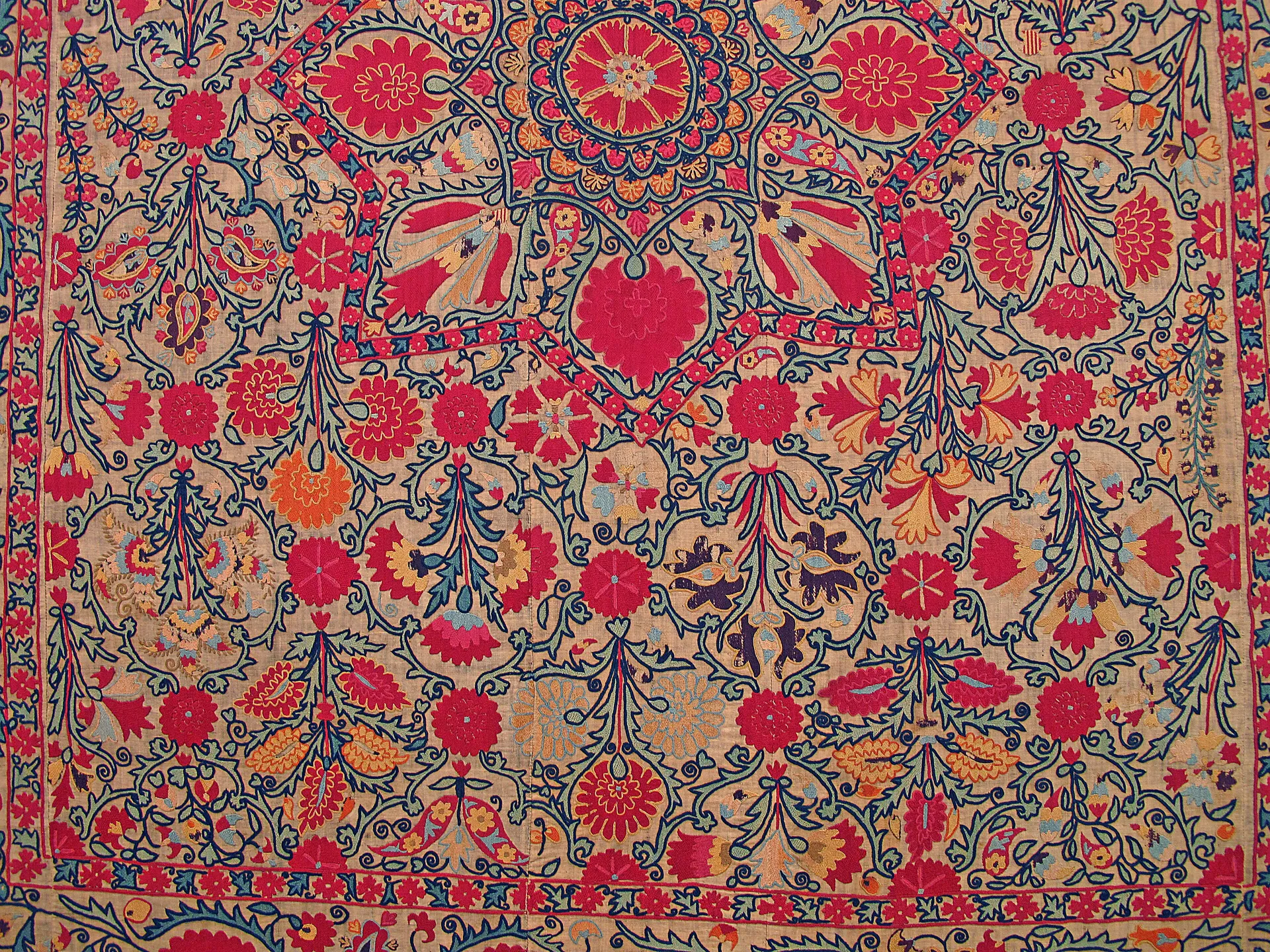
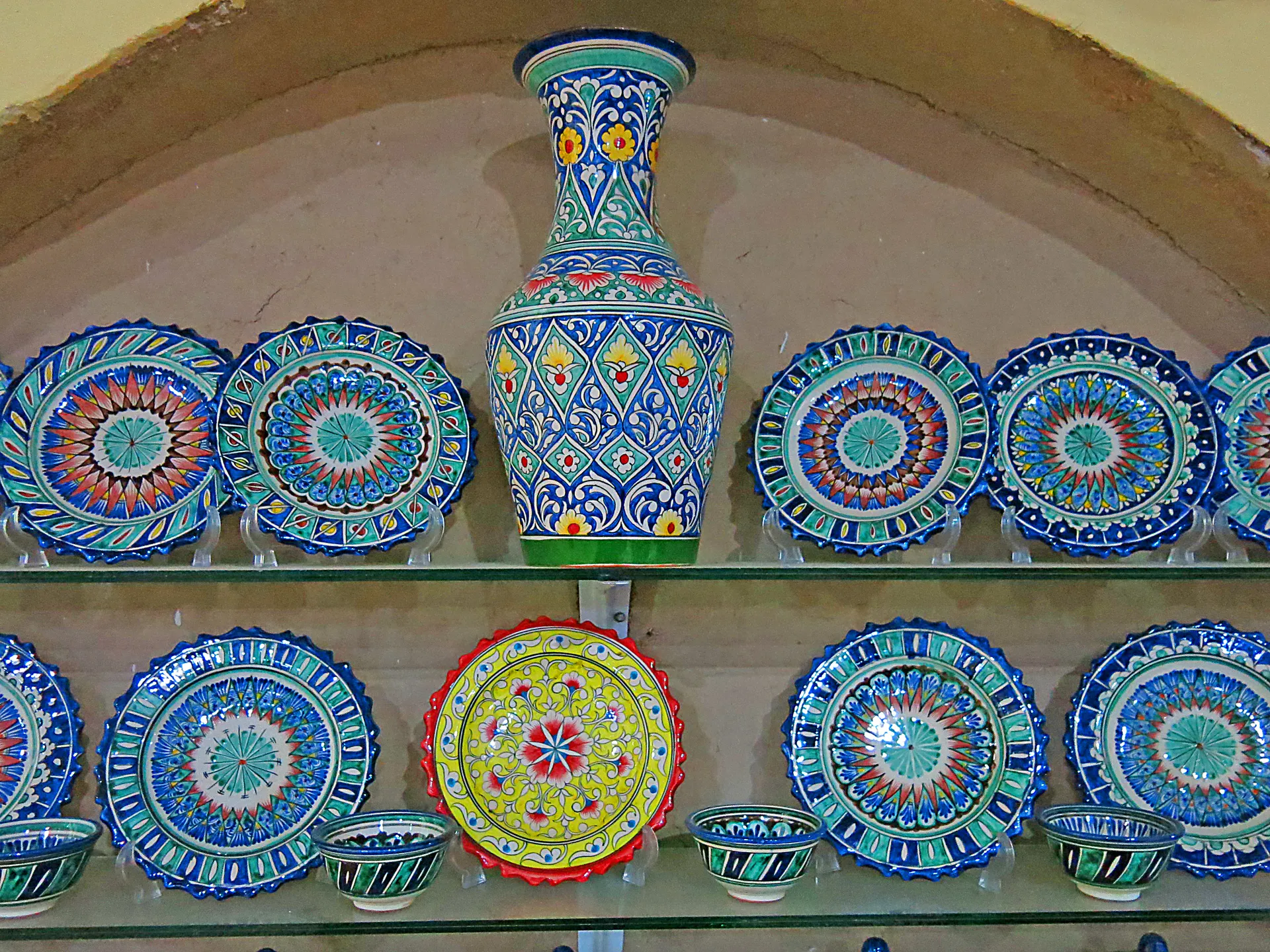
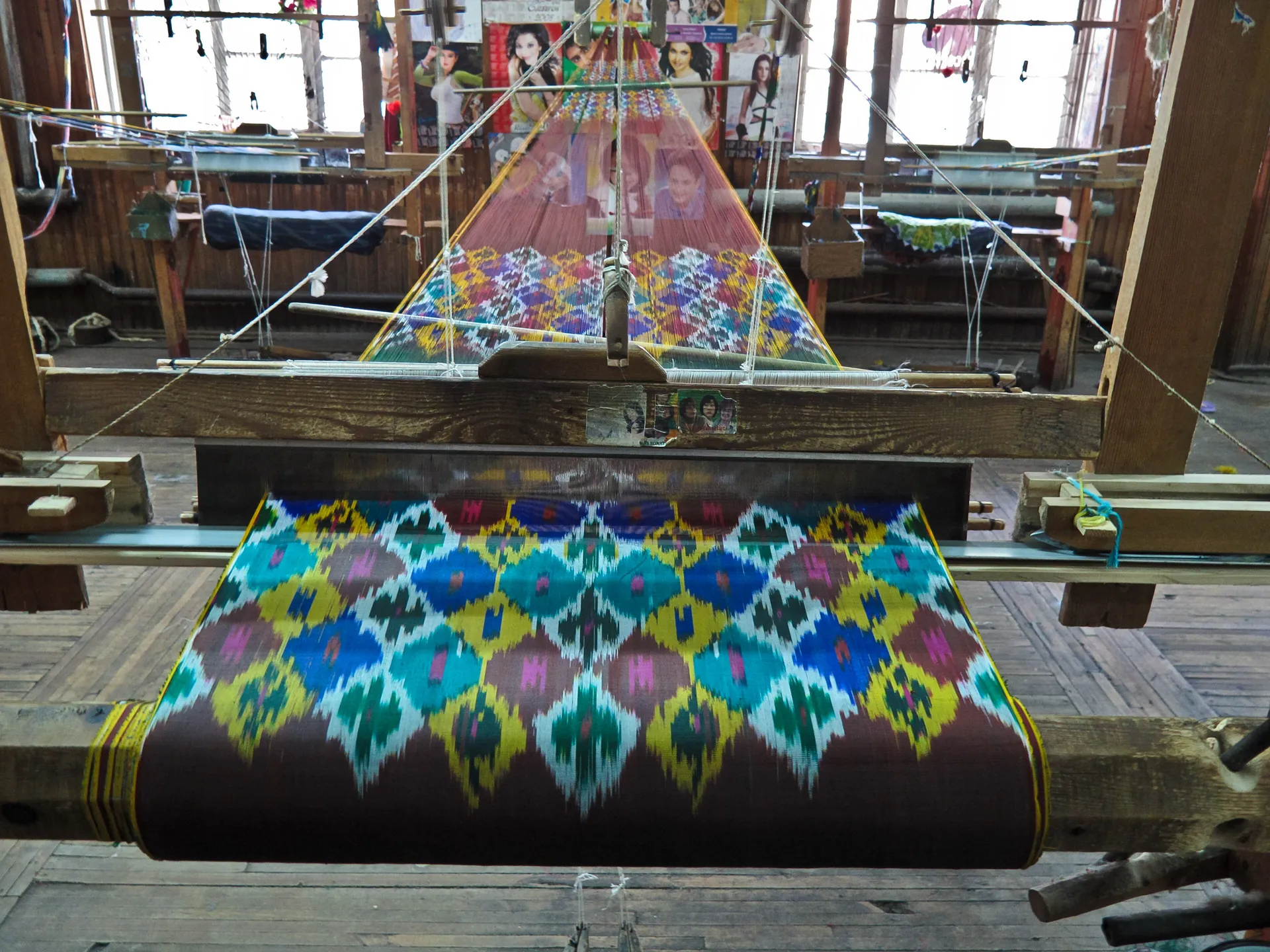
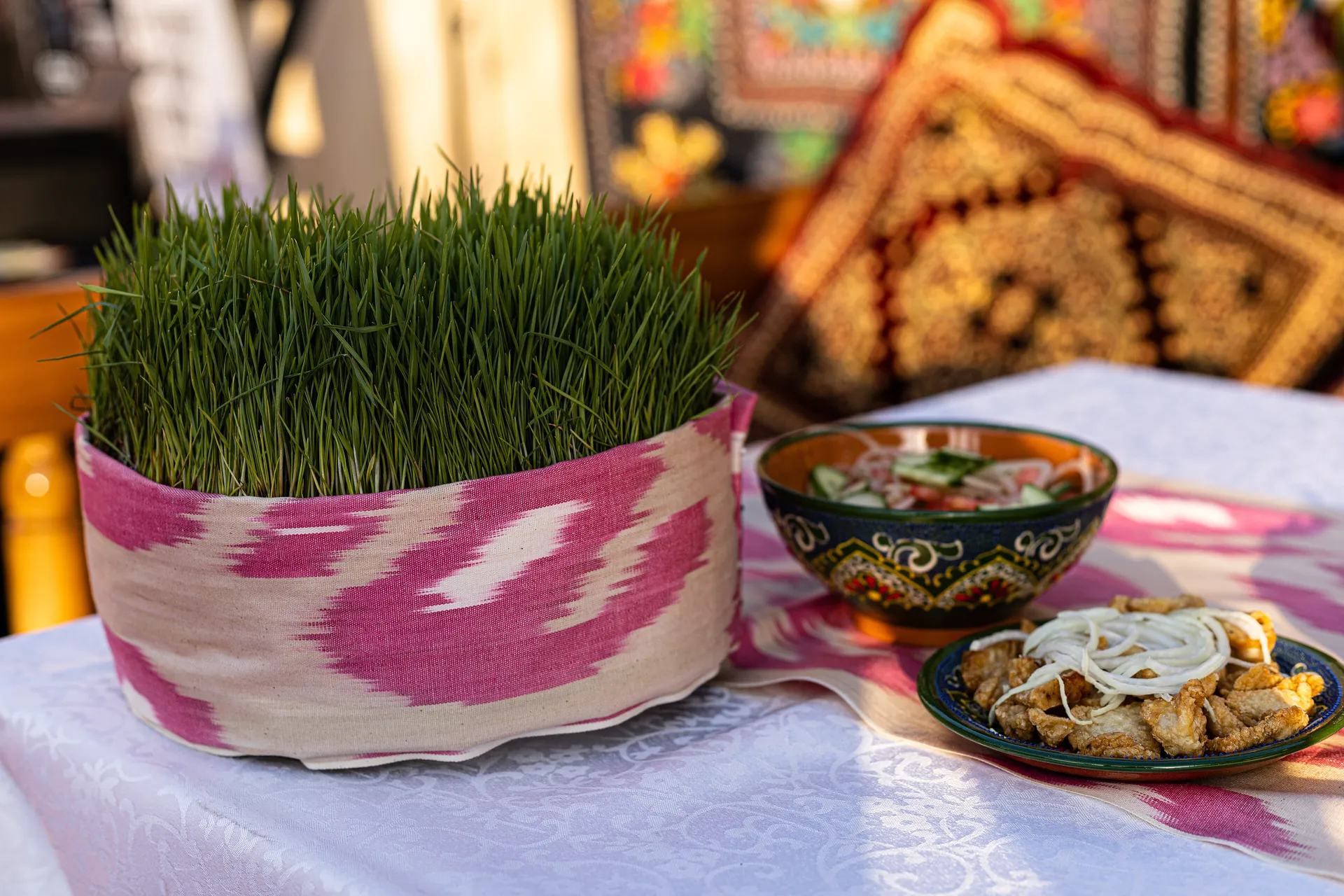
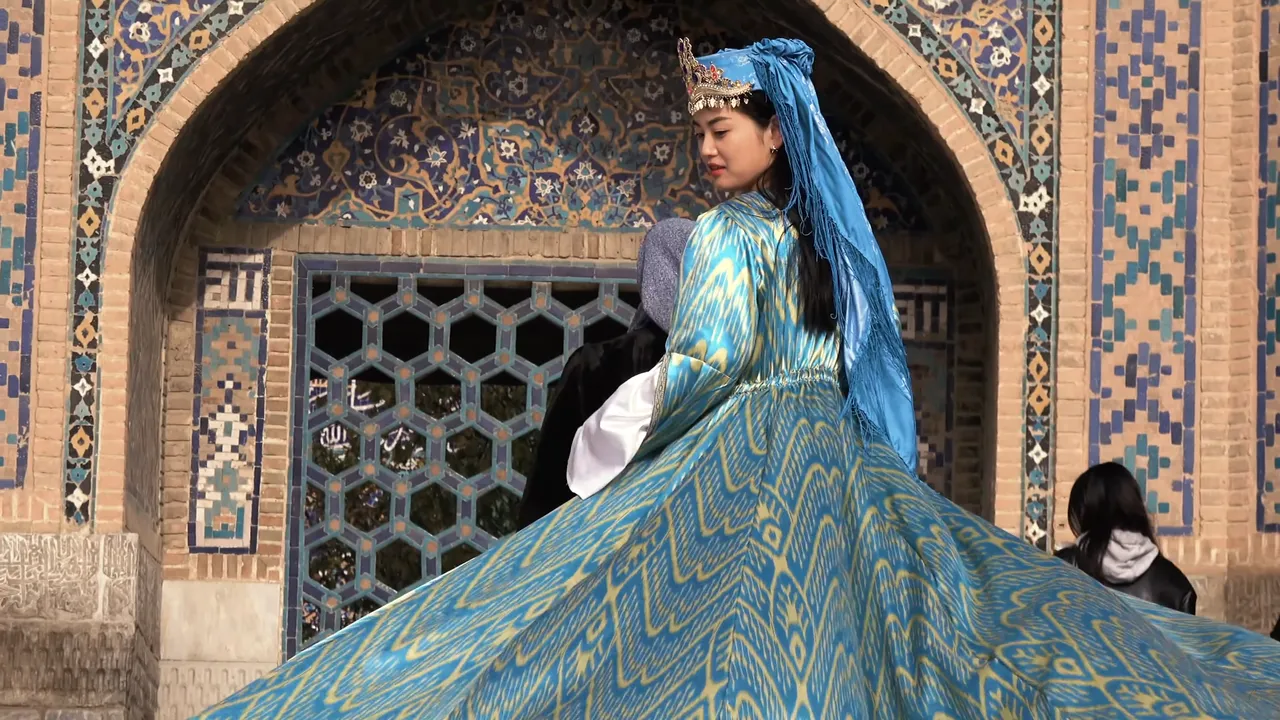
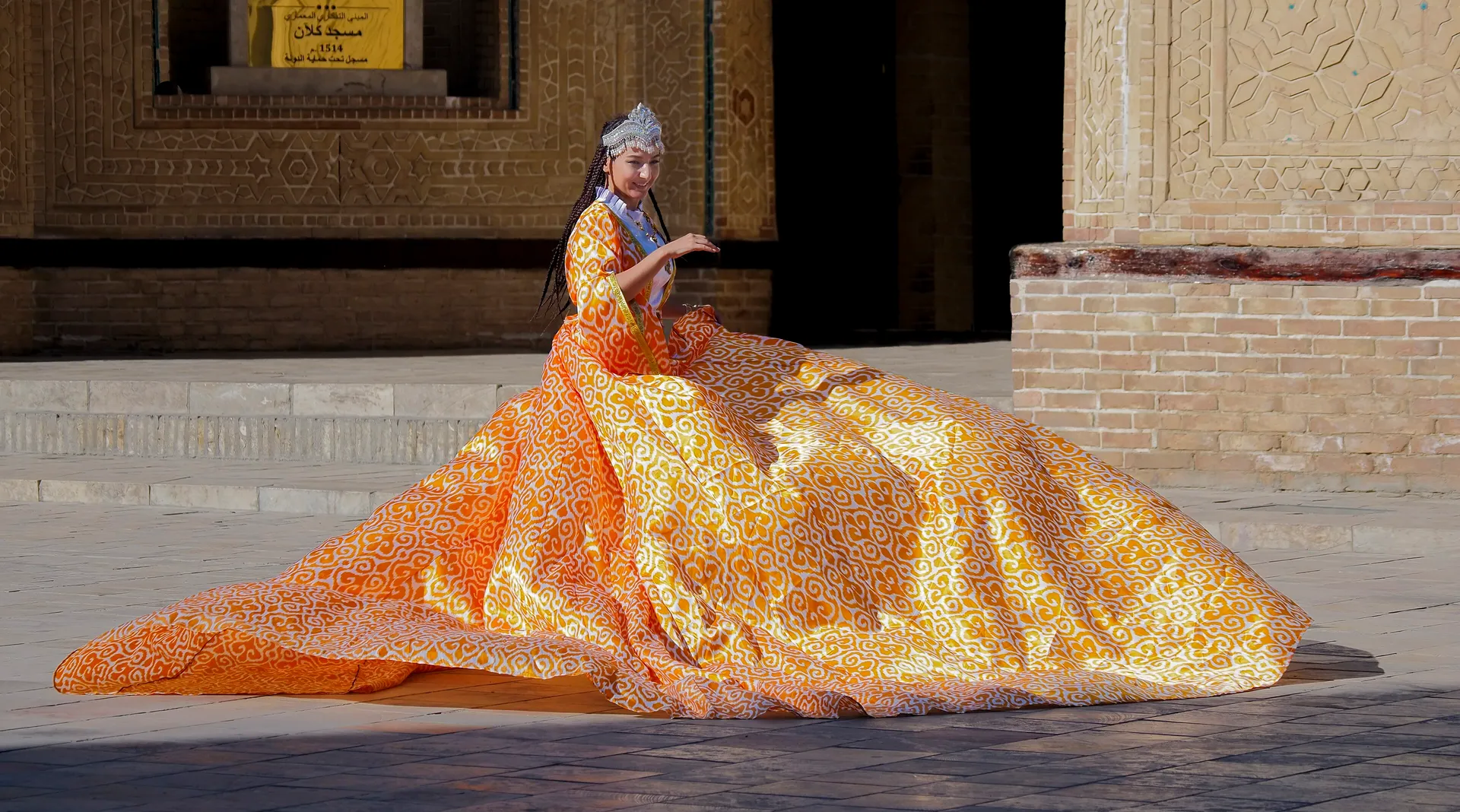
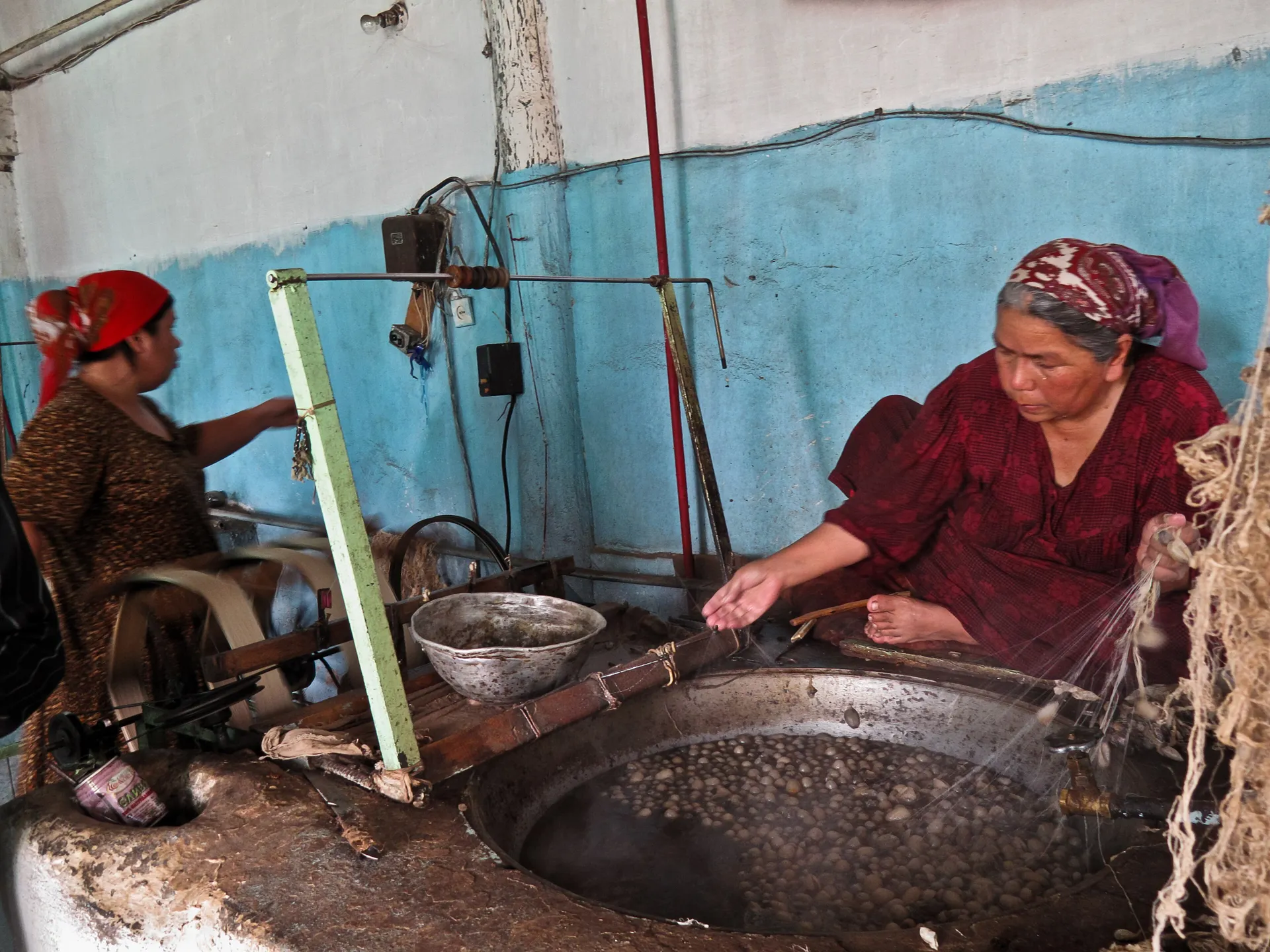
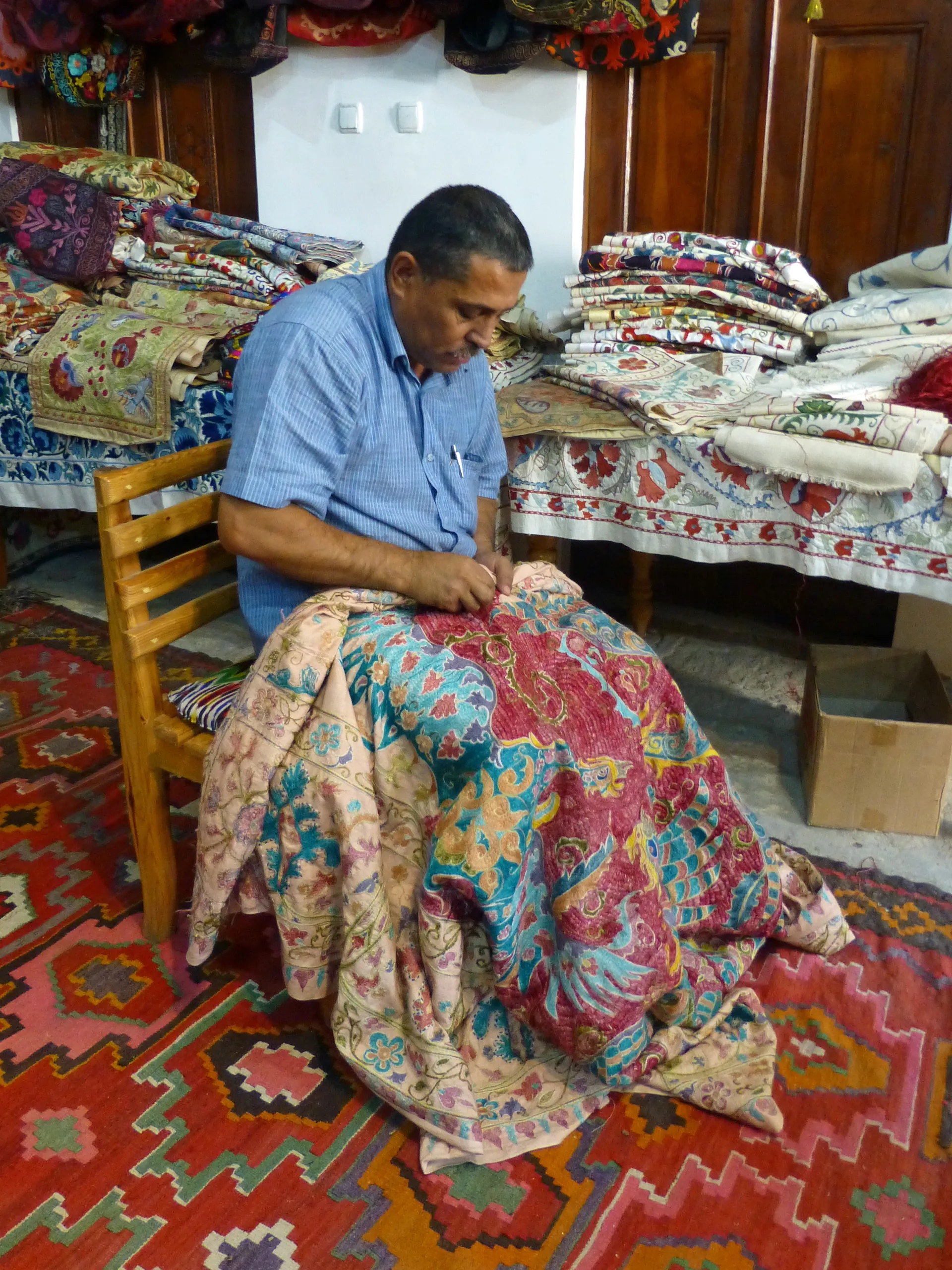
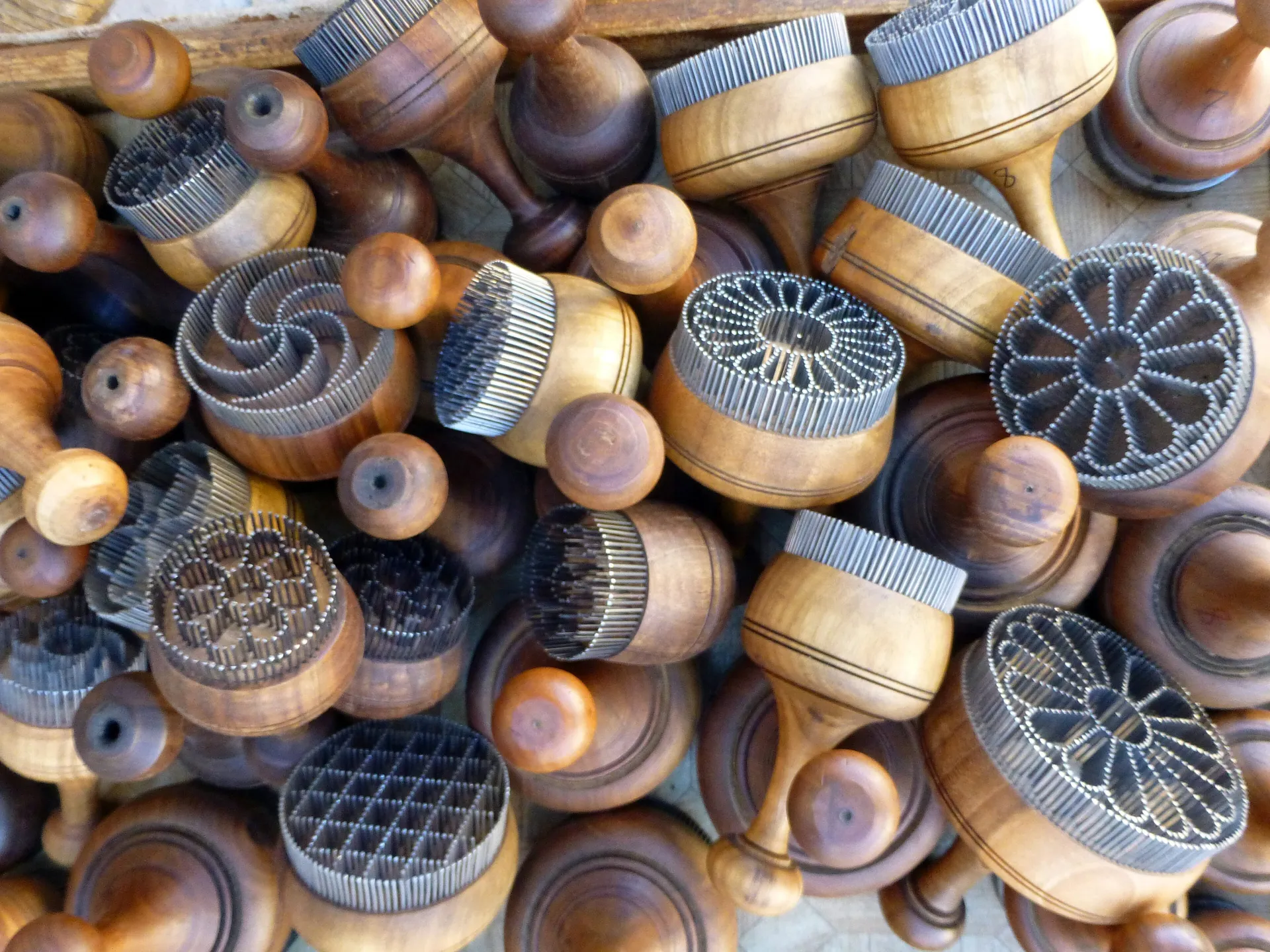
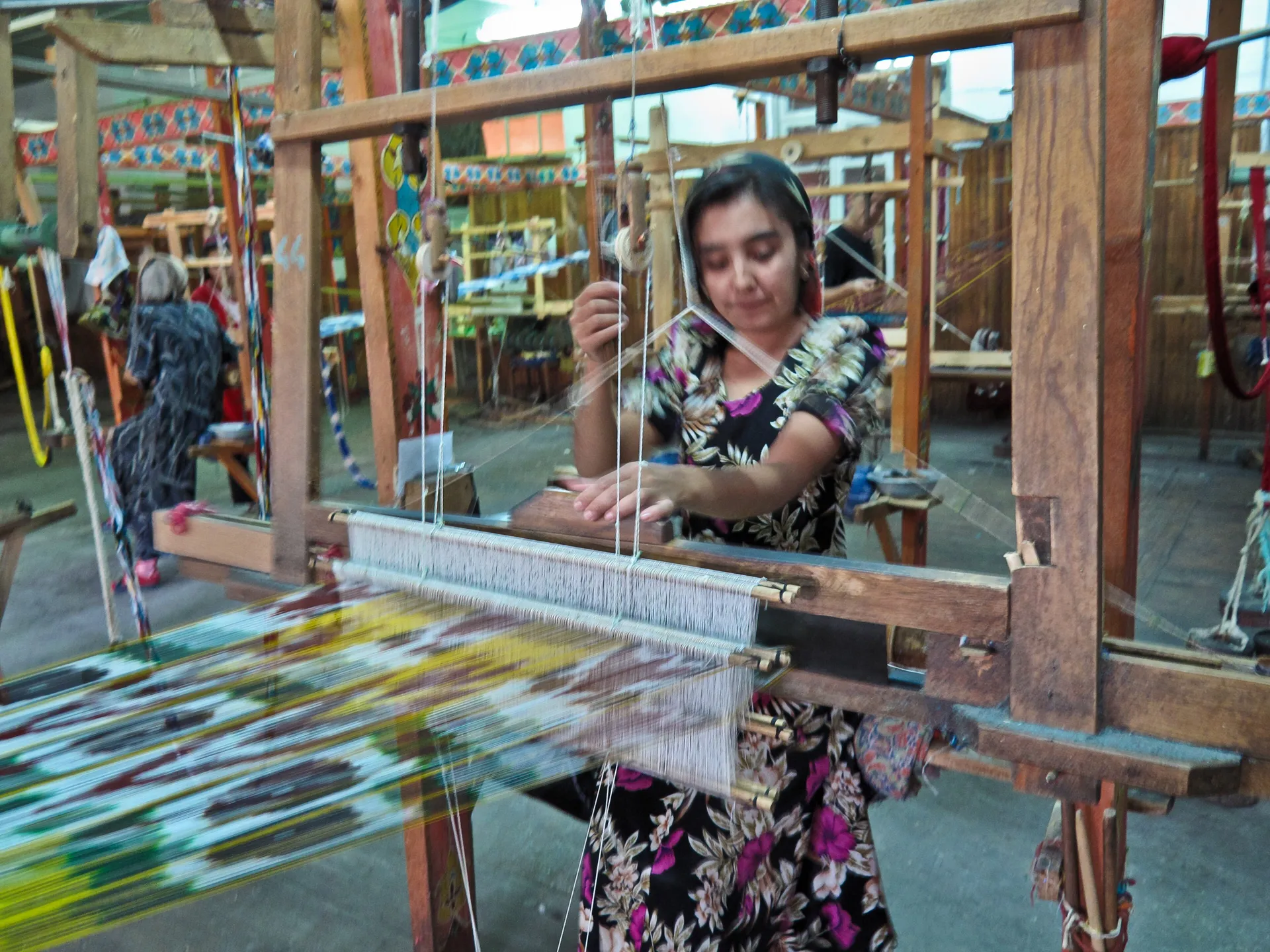
Suzani are large embroidered panels, traditionally stitched by a bride's family and started years before a wedding. Ikat silk — locally abrbandi, "cloud-binding" — is tie-dyed thread by thread before weaving, which is why the pattern has soft, feathered edges. Margilan has made silk for well over a thousand years and Rishtan has been firing turquoise ceramics for as long. The year turns on Navruz, the spring equinox on 21 March, when households cook sumalak overnight from sprouted wheat and take turns stirring it.
Highlights
- The mahalla is recognised in Uzbek law as a unit of citizens' self-government
- A teacup filled to the brim is a hint to leave; a third full means stay
- Nine Uzbek traditions are on UNESCO's Intangible Cultural Heritage lists, including Khorezm's Lazgi dance
- Sumalak is cooked for Navruz over a whole night and contains no sugar — the sweetness is from sprouted wheat