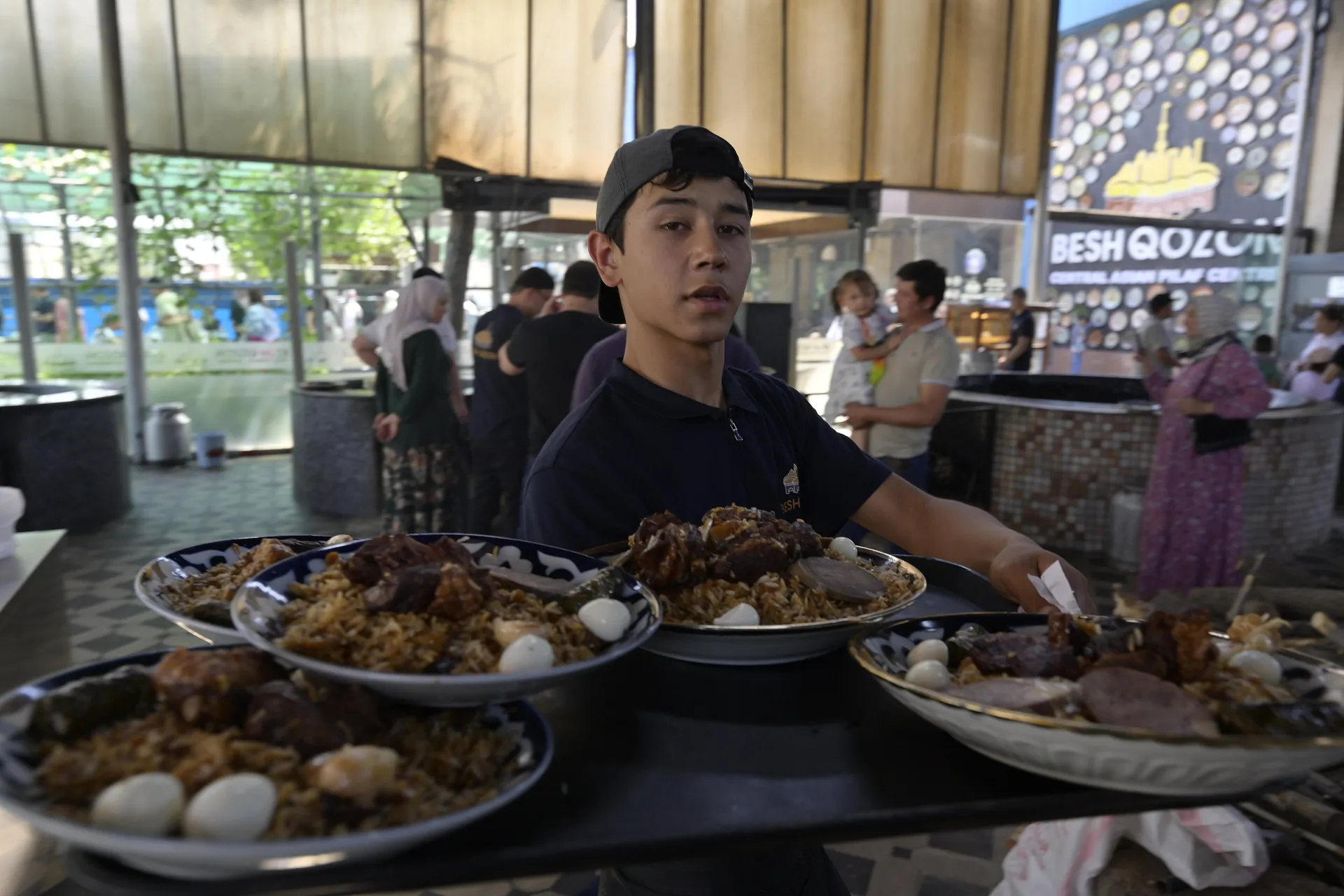
Plov for the lunchtime crowd
How plov is actually built
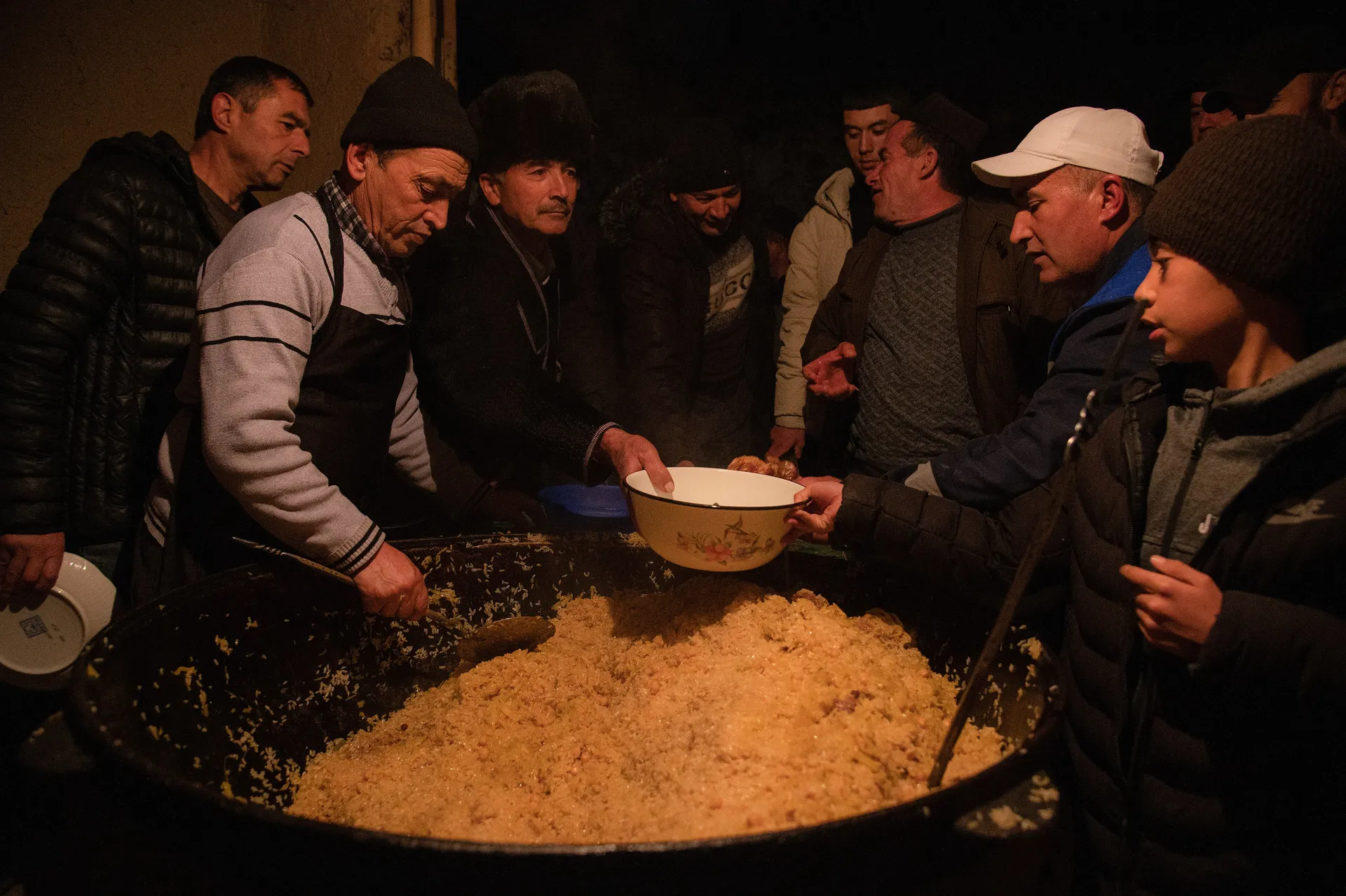
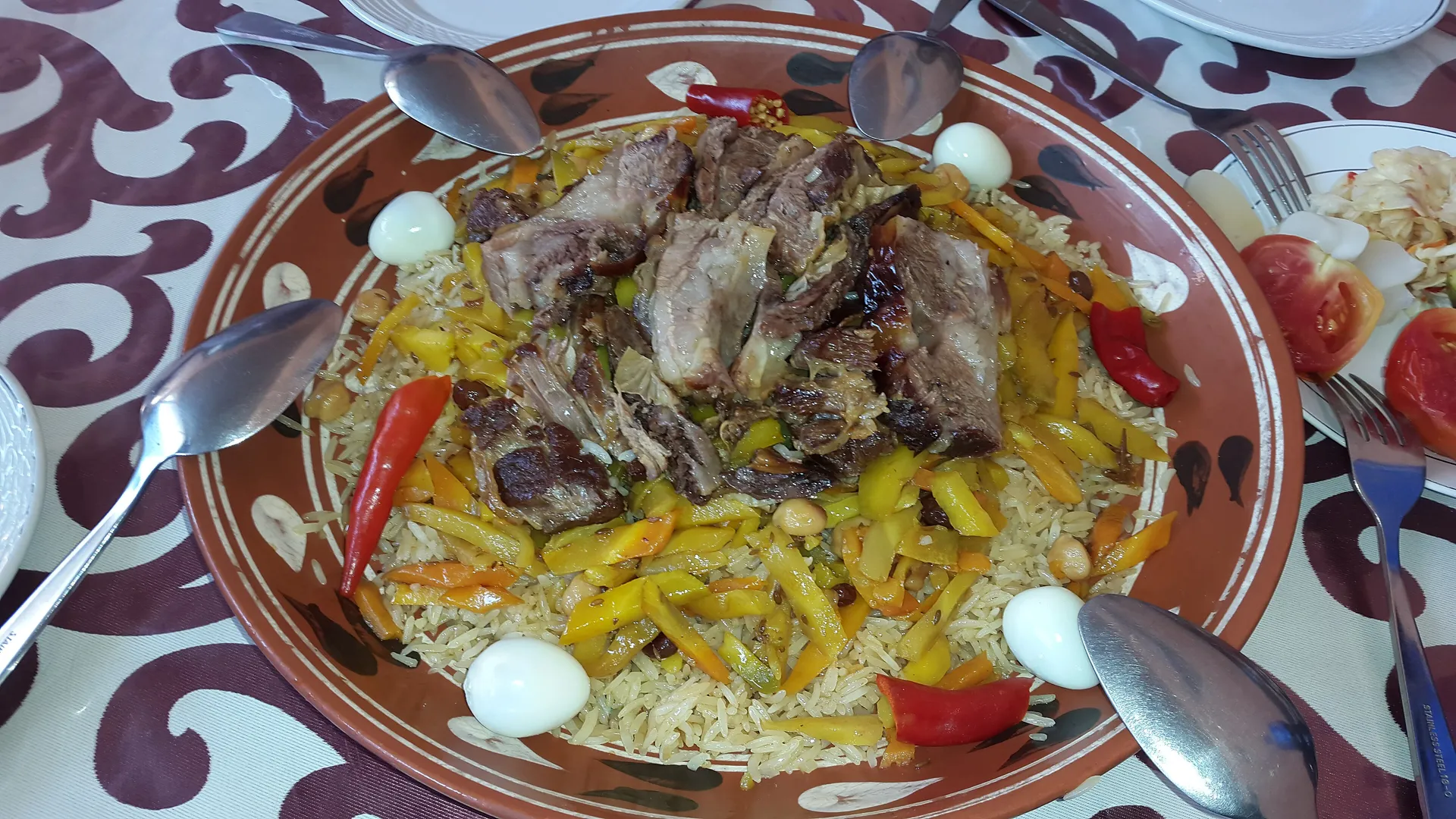
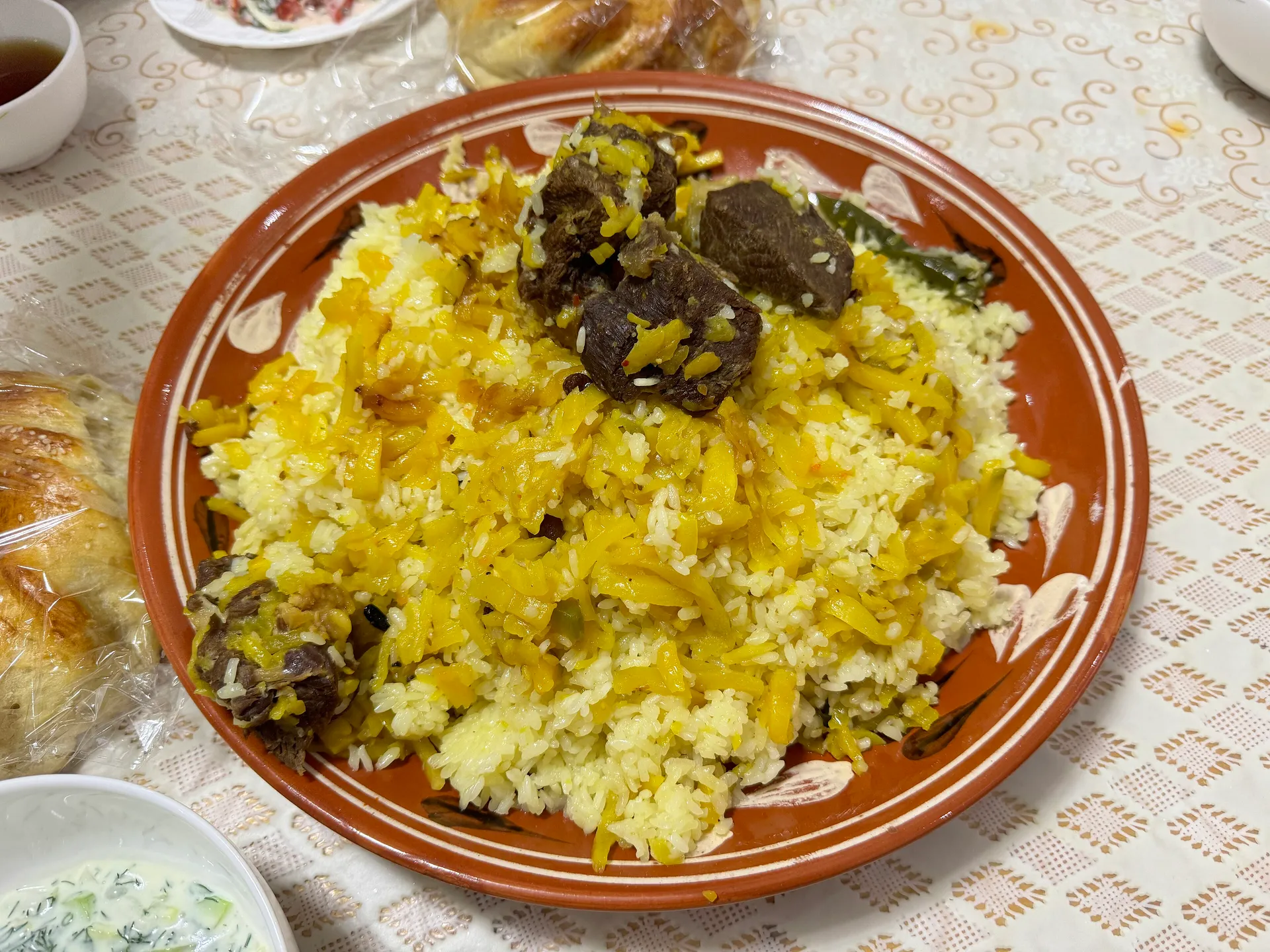
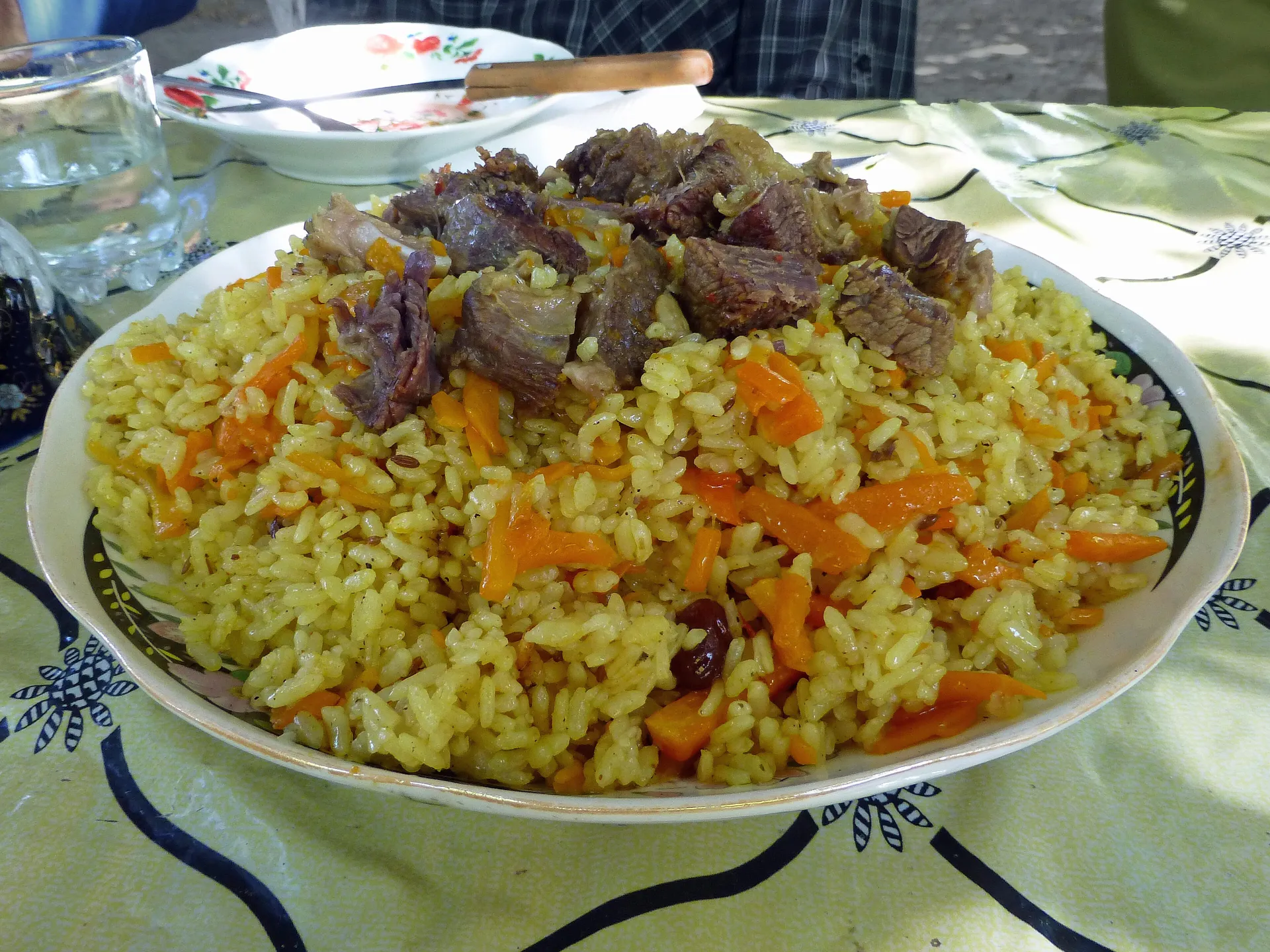
It starts with zirvak: onions, carrots cut into long batons, and meat browned in a cast-iron kazan until the fat runs clear. Rice goes on top and is never stirred in — it steams. Fergana devzira rice, reddish and heavy, absorbs far more of the zirvak than ordinary rice, which is why cooks pay for it. Samarkand serves the layers separately and undisturbed; Tashkent mixes at the table; Bukhara adds raisins. UNESCO added palov culture to its Intangible Heritage list in 2016.
Bread, fire and the rest of the table
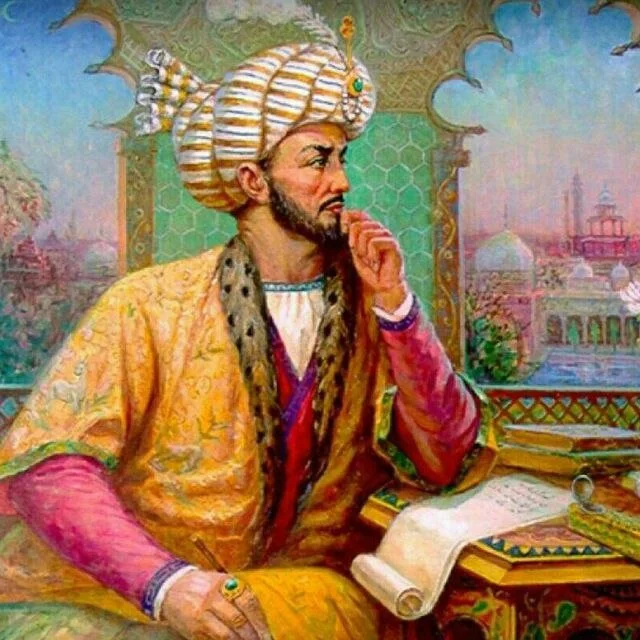
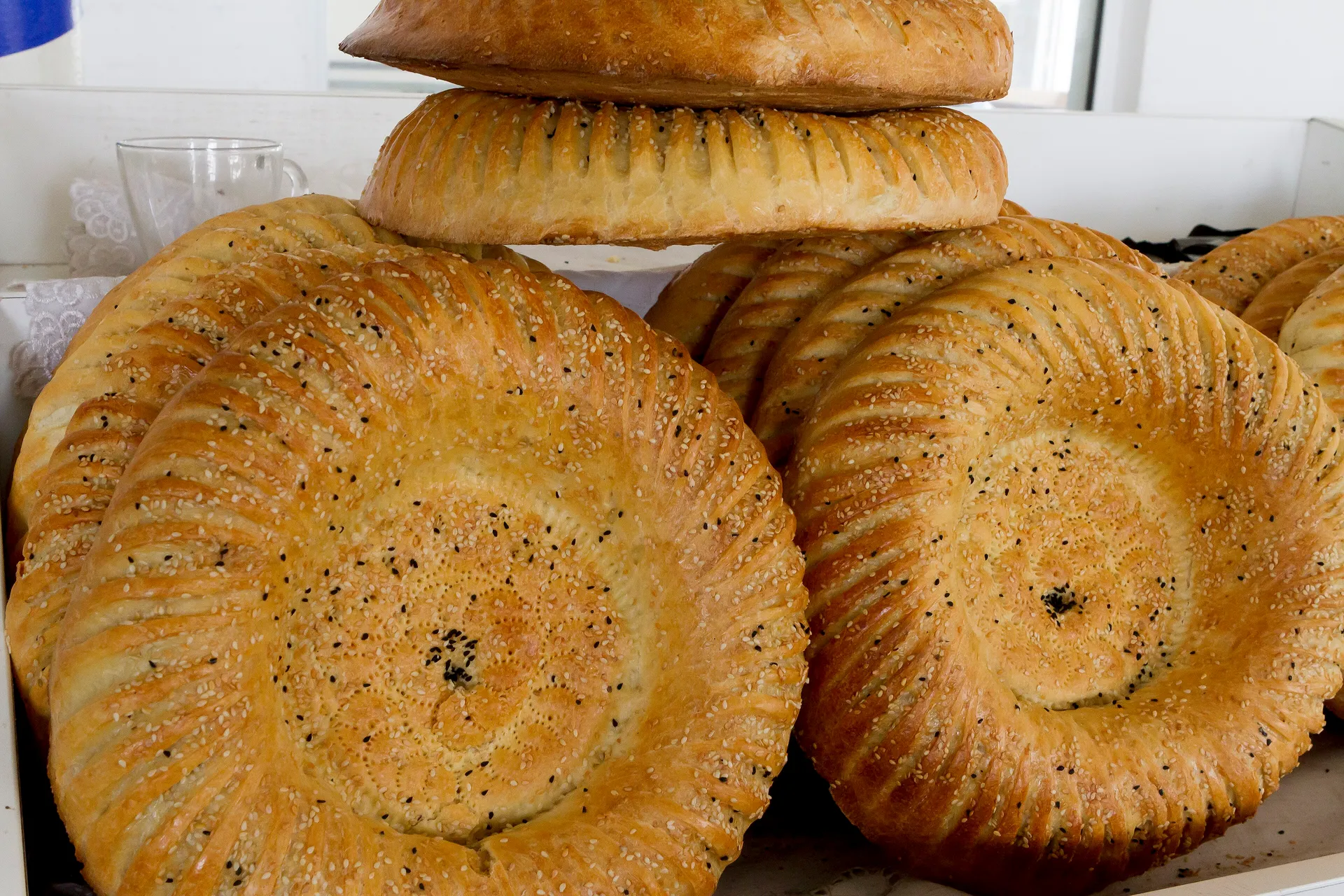
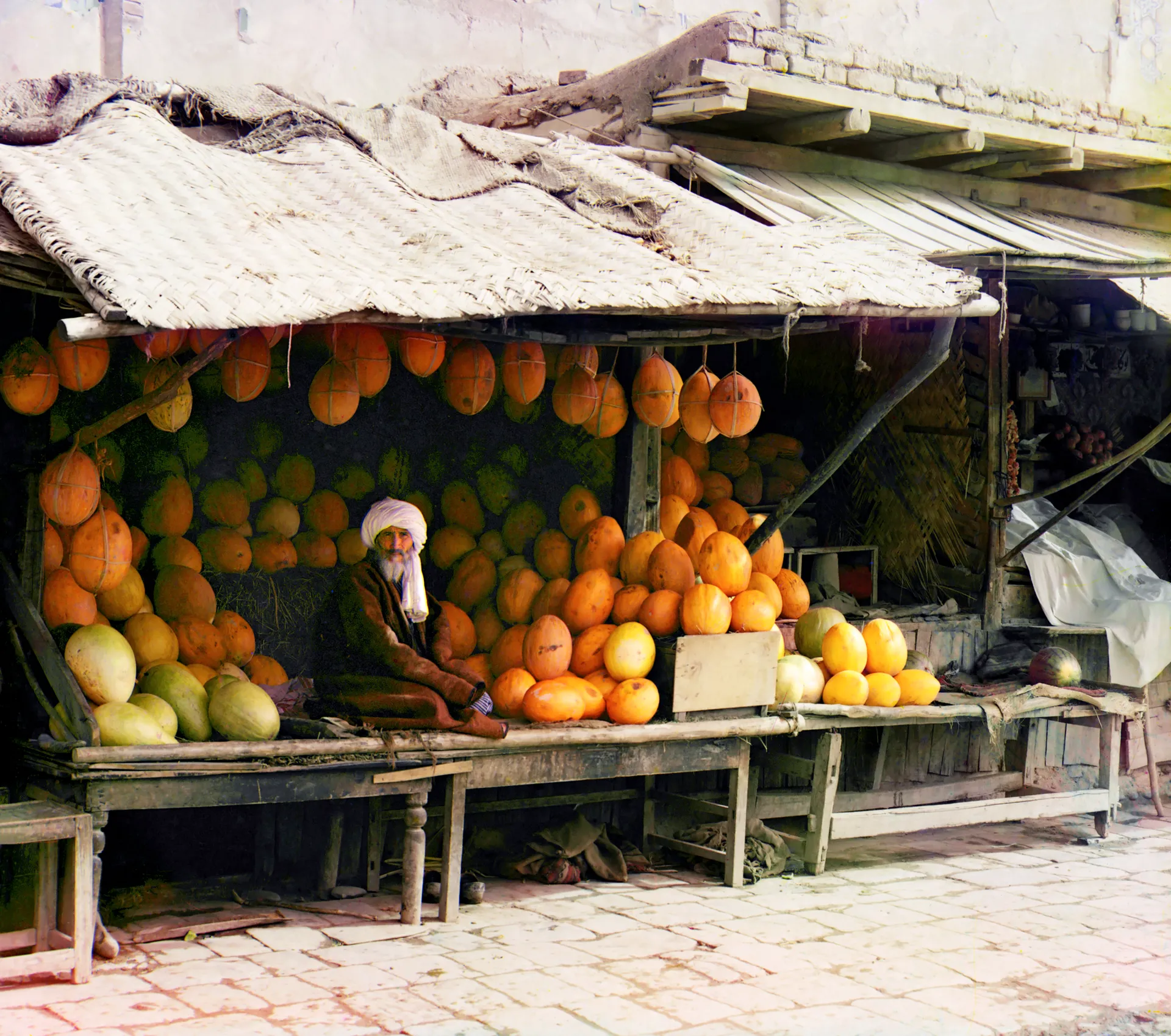
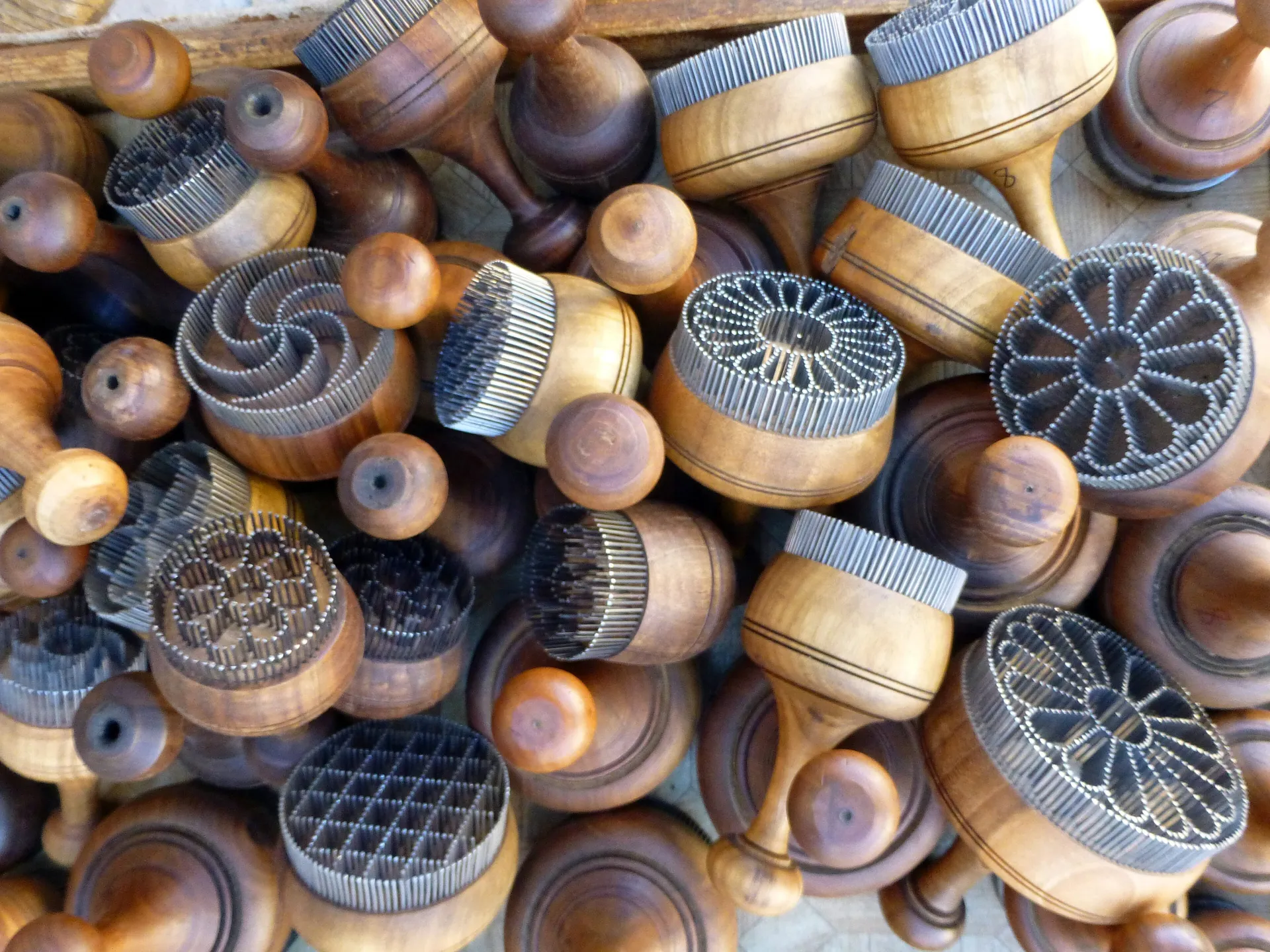
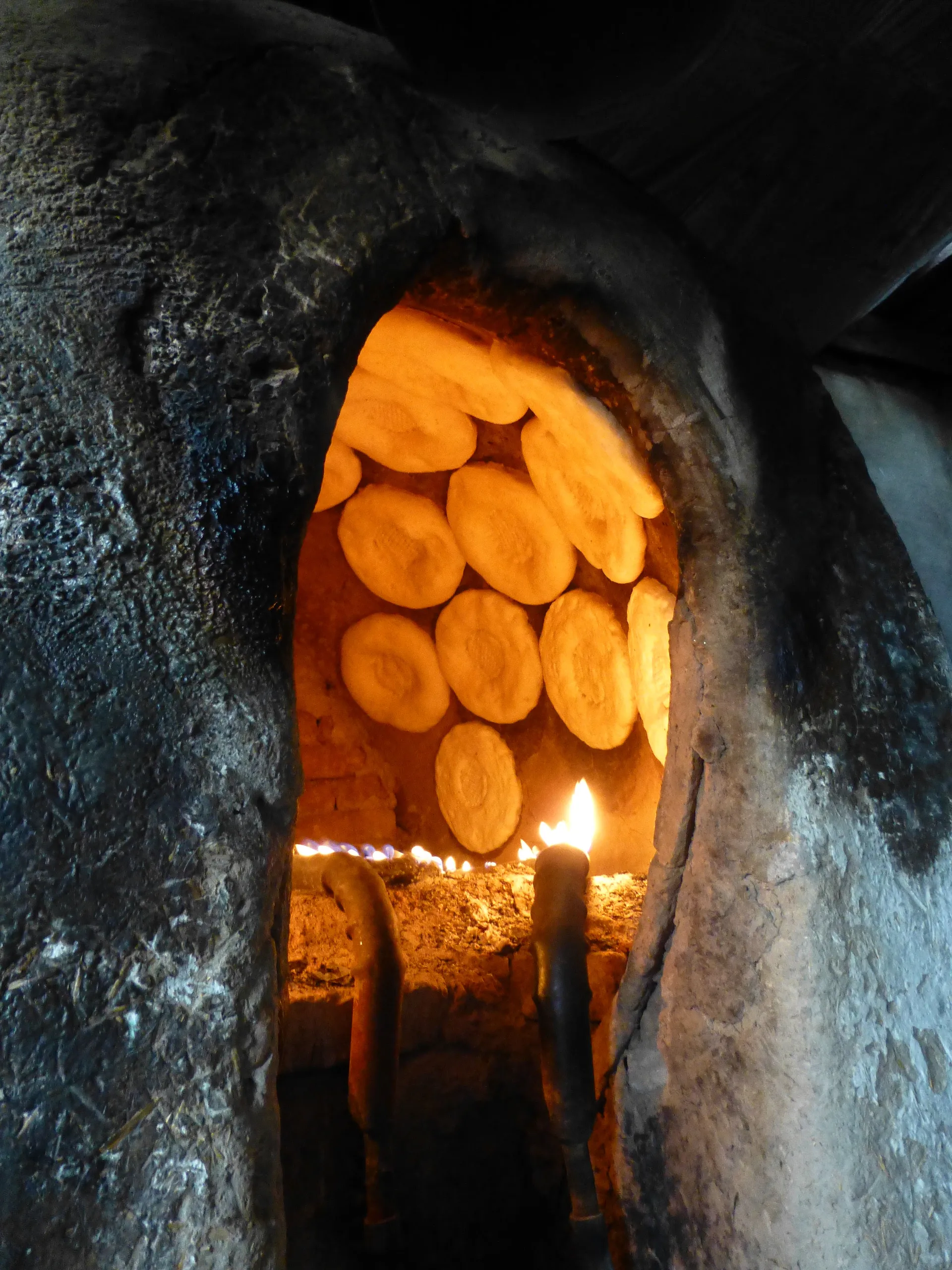
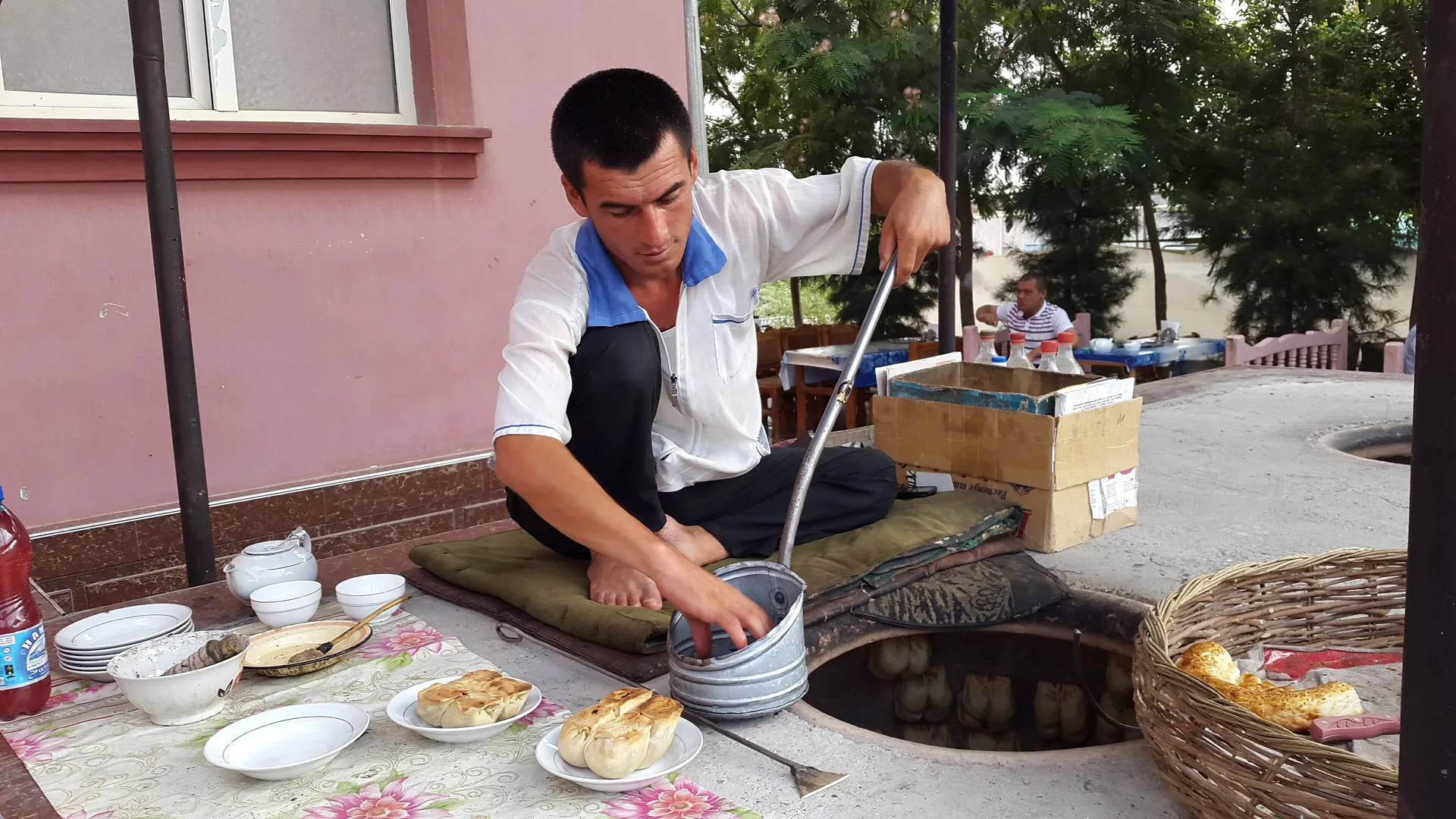
Non is slapped onto the inner wall of a clay tandir and baked in minutes. Before it goes in, the centre is stamped with a chekich — a nail-studded seal that both decorates the loaf and stops the middle from puffing. Every city bakes its own shape; Samarkand's is famously dense and keeps for weeks. Beyond that: somsa baked in the same tandir, lagman hand-pulled, manti steamed, shurpa simmered, and green tea with everything. Melons are a serious matter — Babur wrote from India that he missed them.
Dishes to know
Plov (osh)
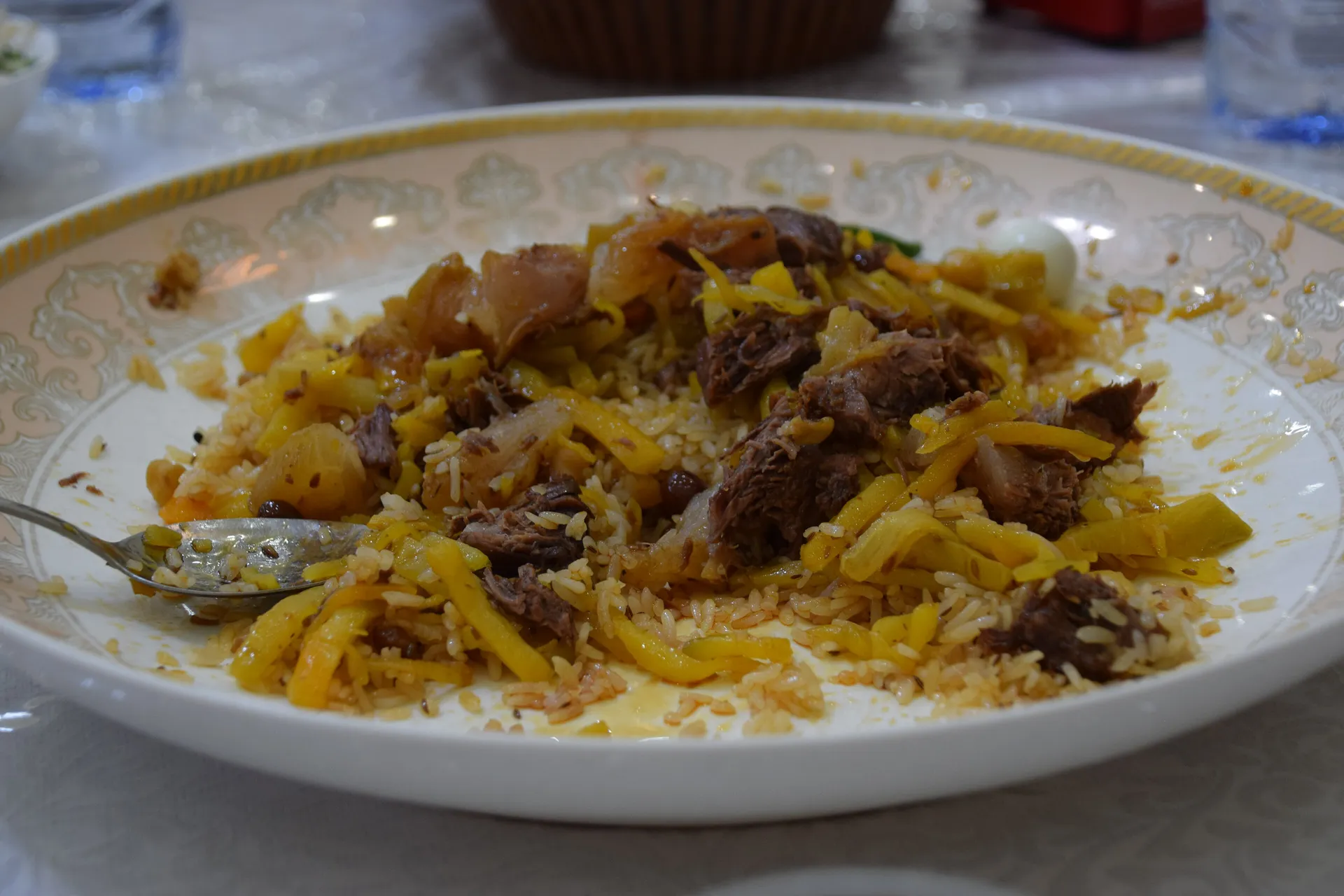
Rice, lamb and yellow carrots from one kazan — the national dish, and a matter of regional pride.
Samsa
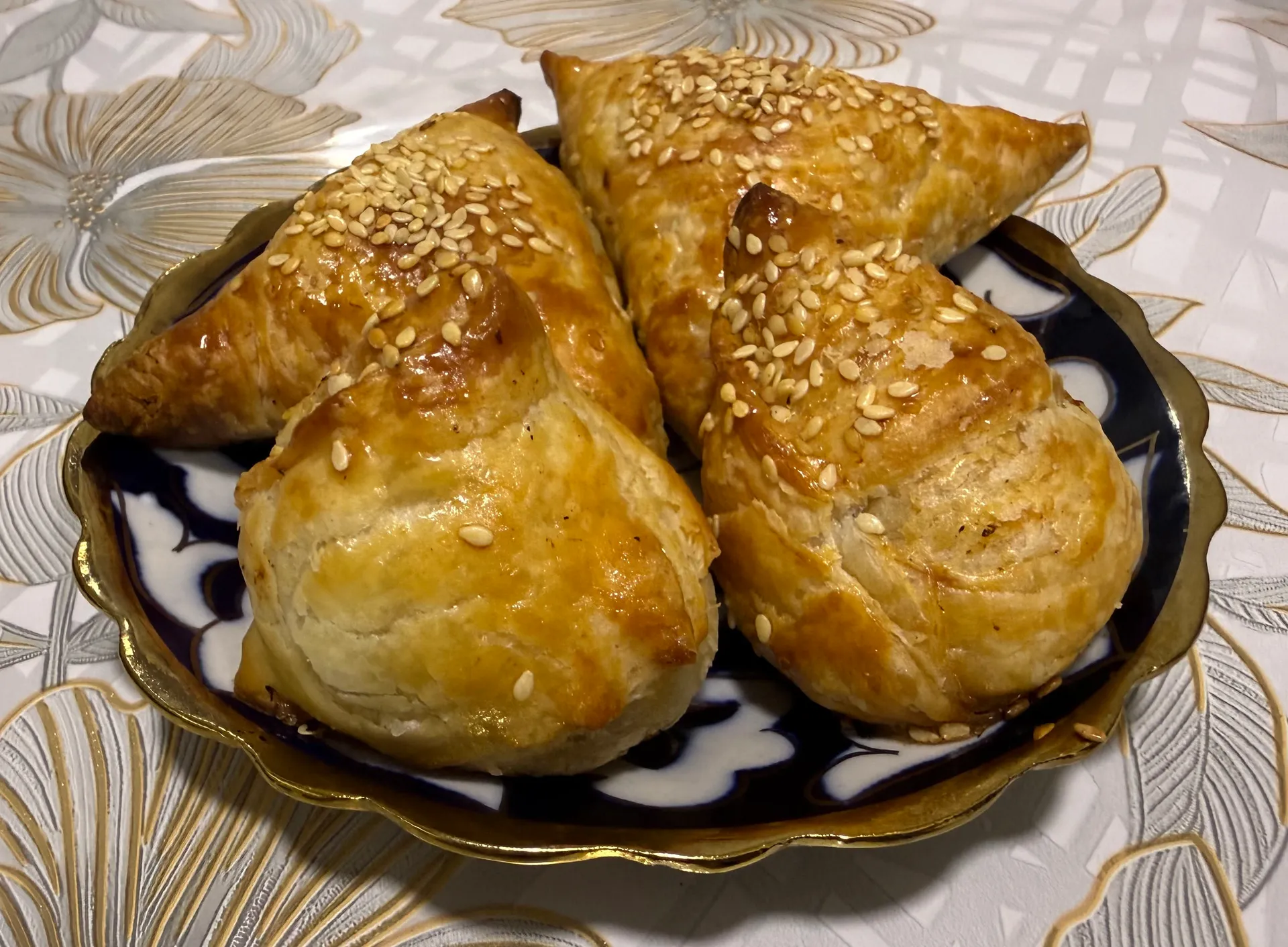
Flaky pastry filled with lamb and onion, baked on the walls of a clay tandir.
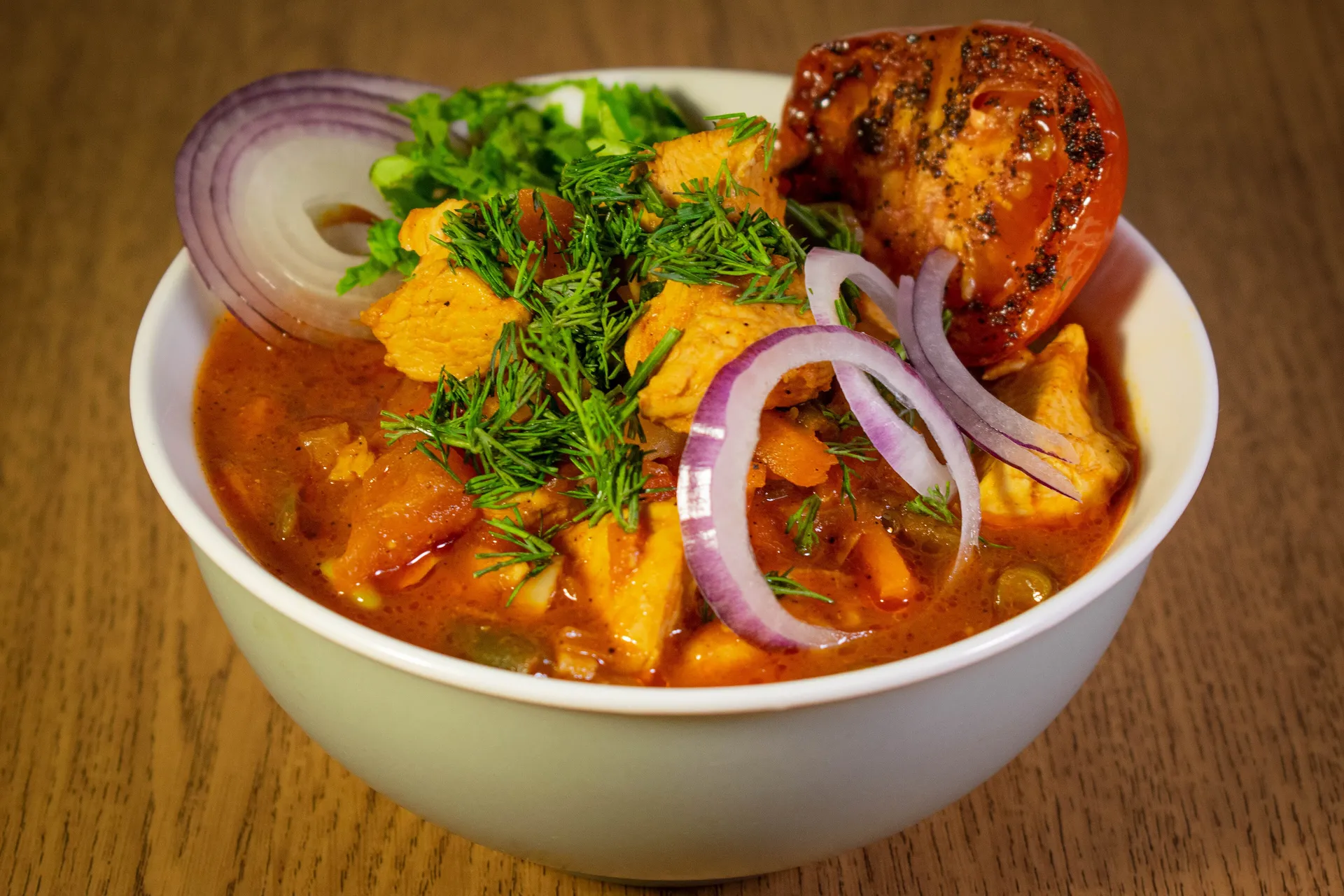
Lagman
Hand-pulled noodles under a sauce of lamb, peppers and radish.
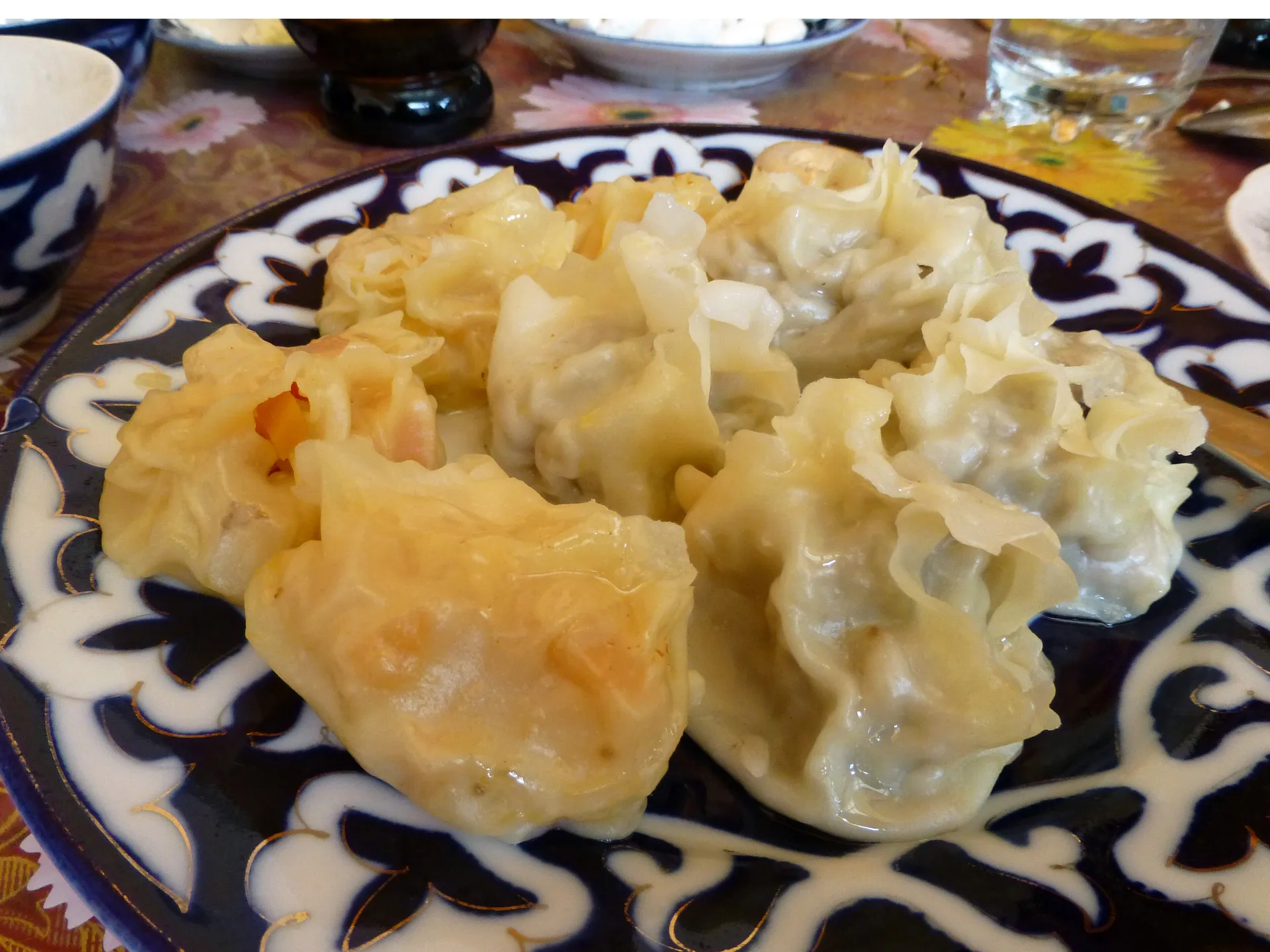
Manti
Large steamed dumplings, juicy with lamb and onion.
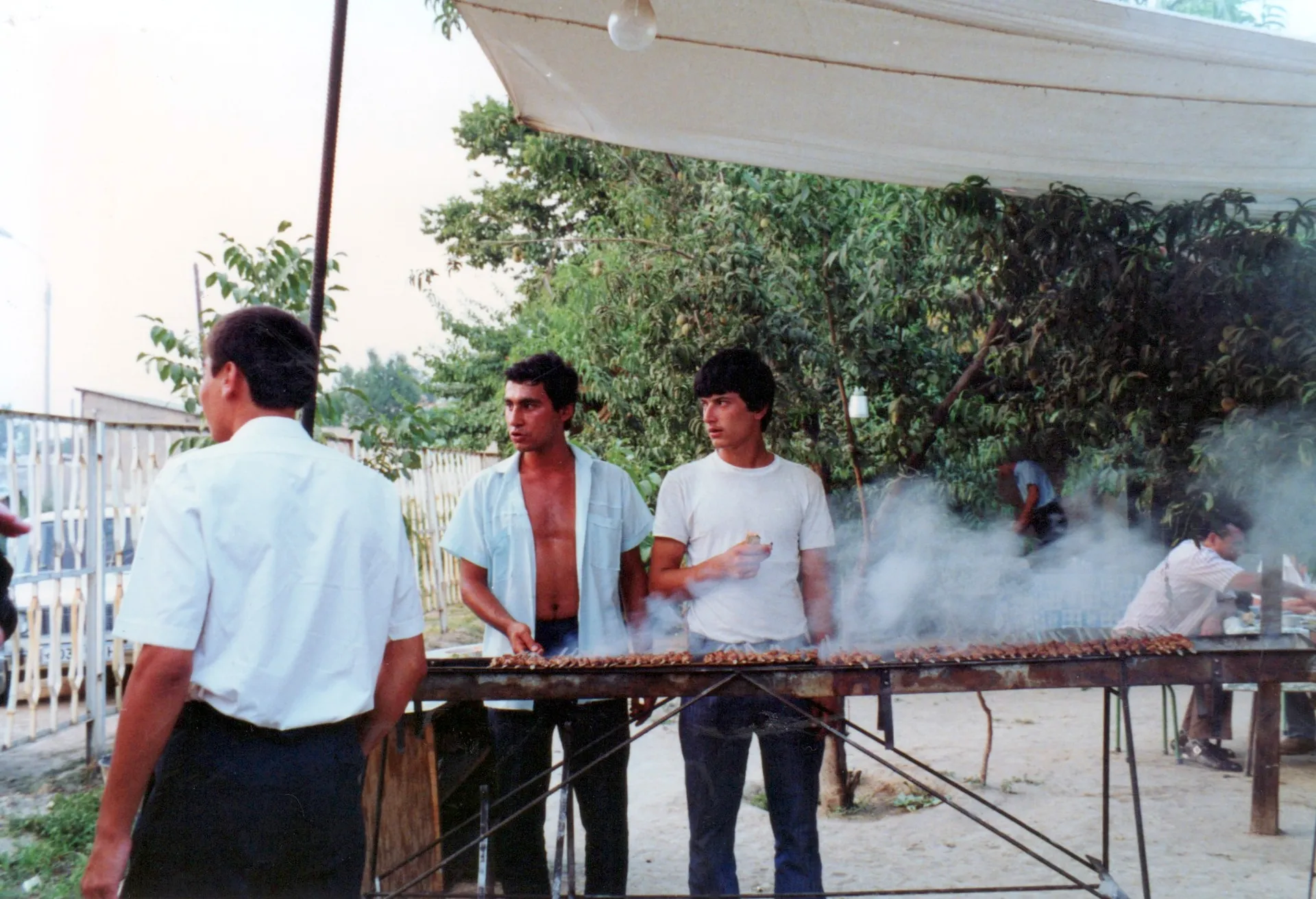
Shashlik
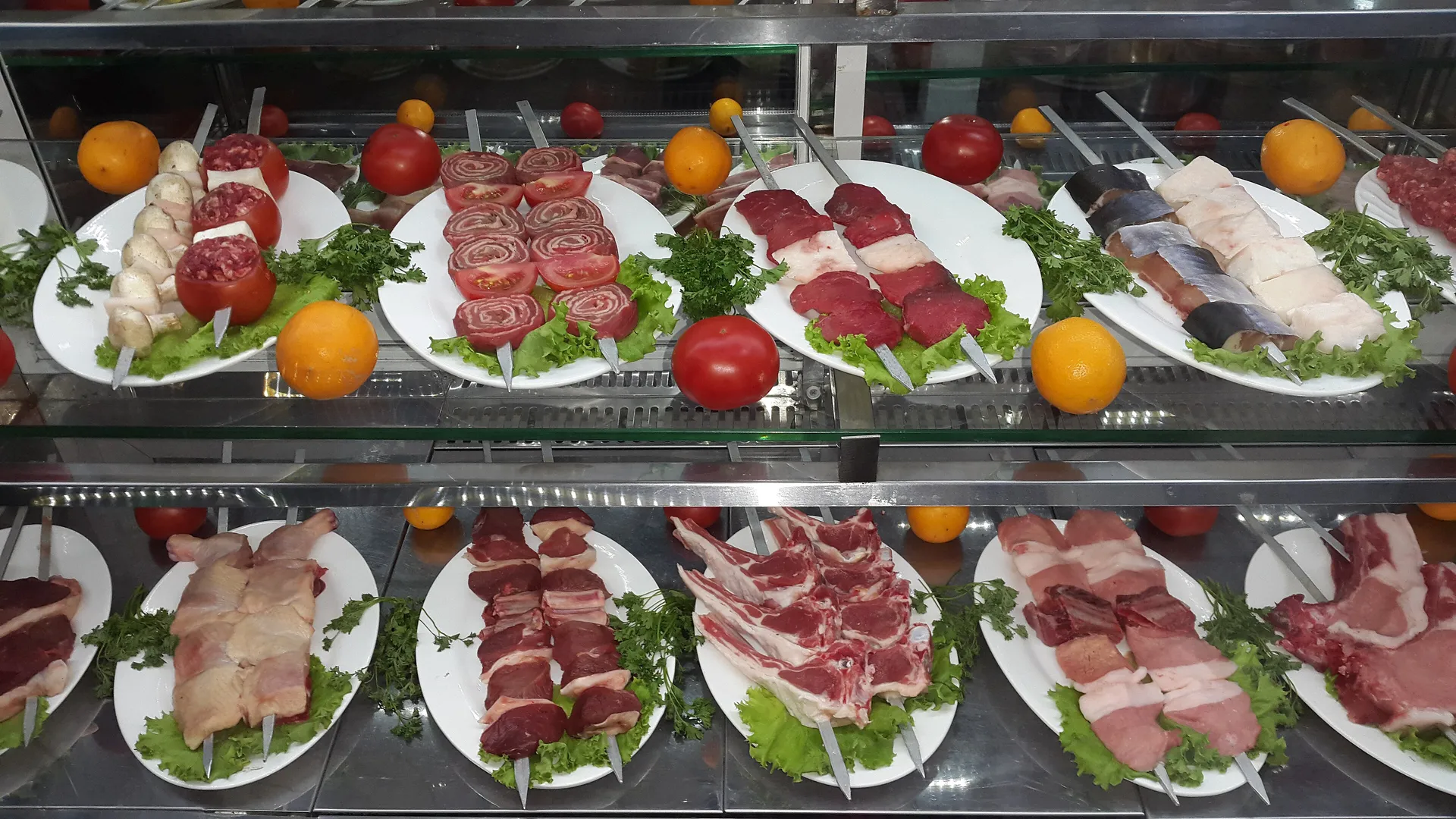
Lamb skewers grilled over charcoal, served with raw onion and hot bread.
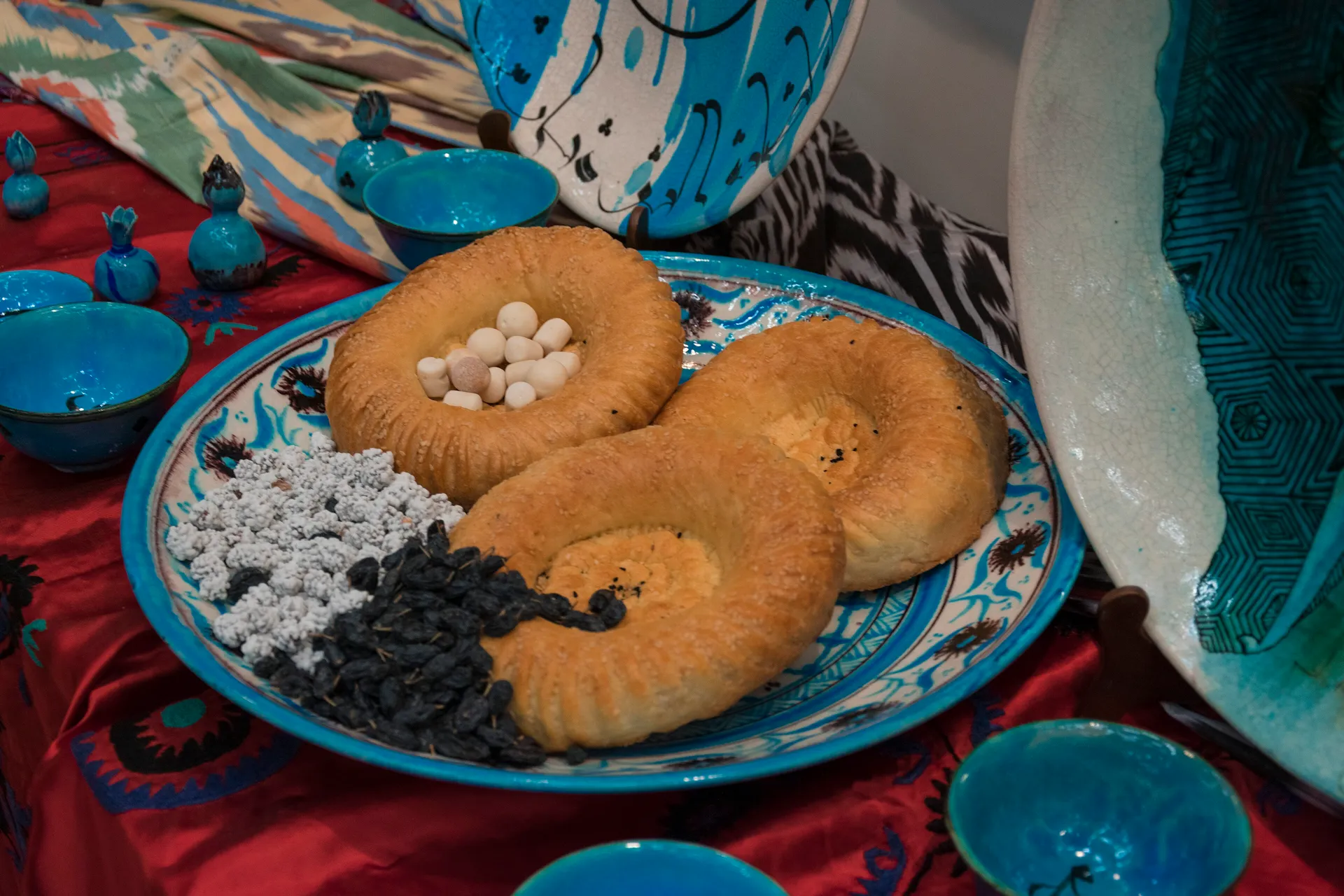
Non (tandir bread)
Round bread with a stamped centre, baked on the wall of a clay oven.
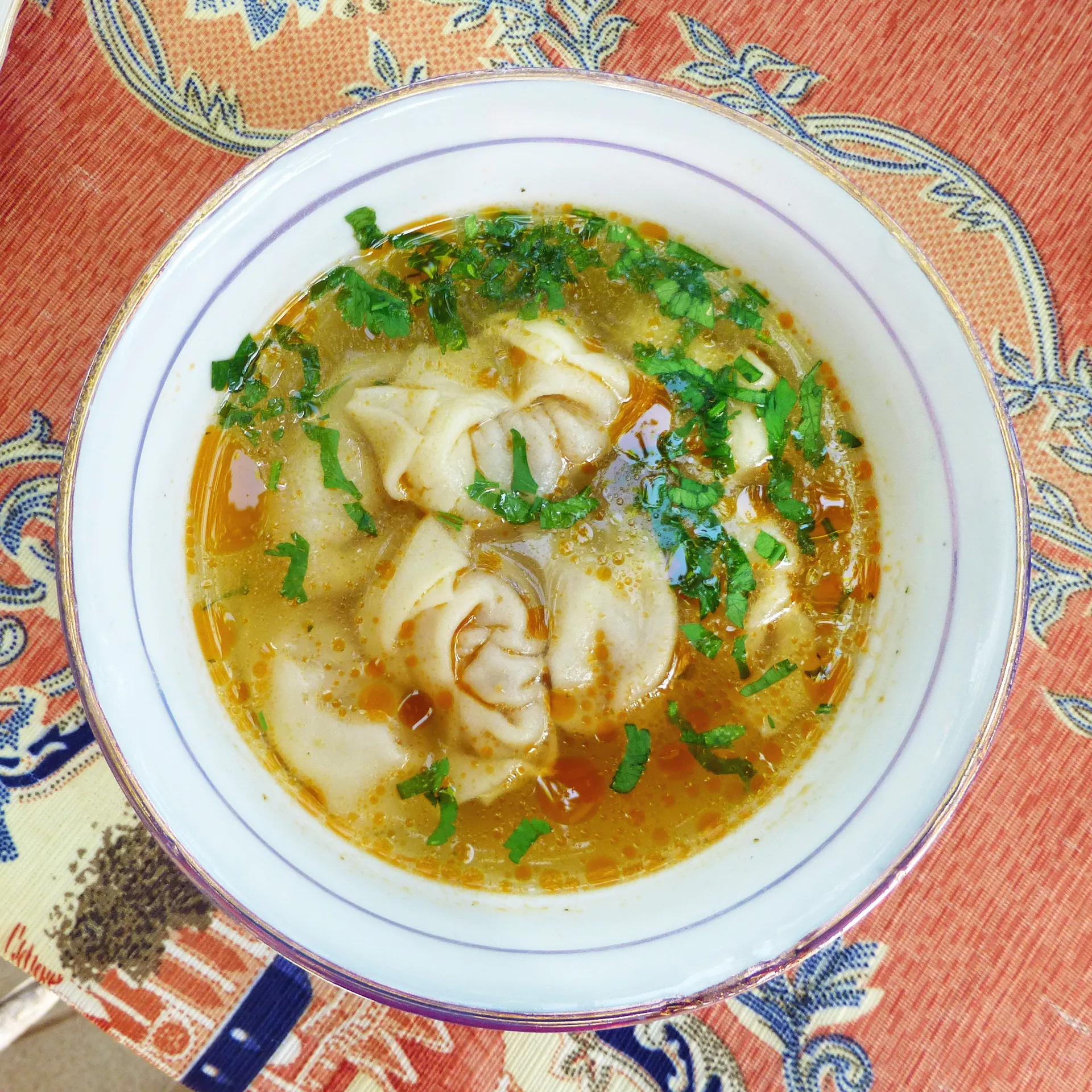
Chuchvara
Tiny meat dumplings in clear broth, the smaller the better.
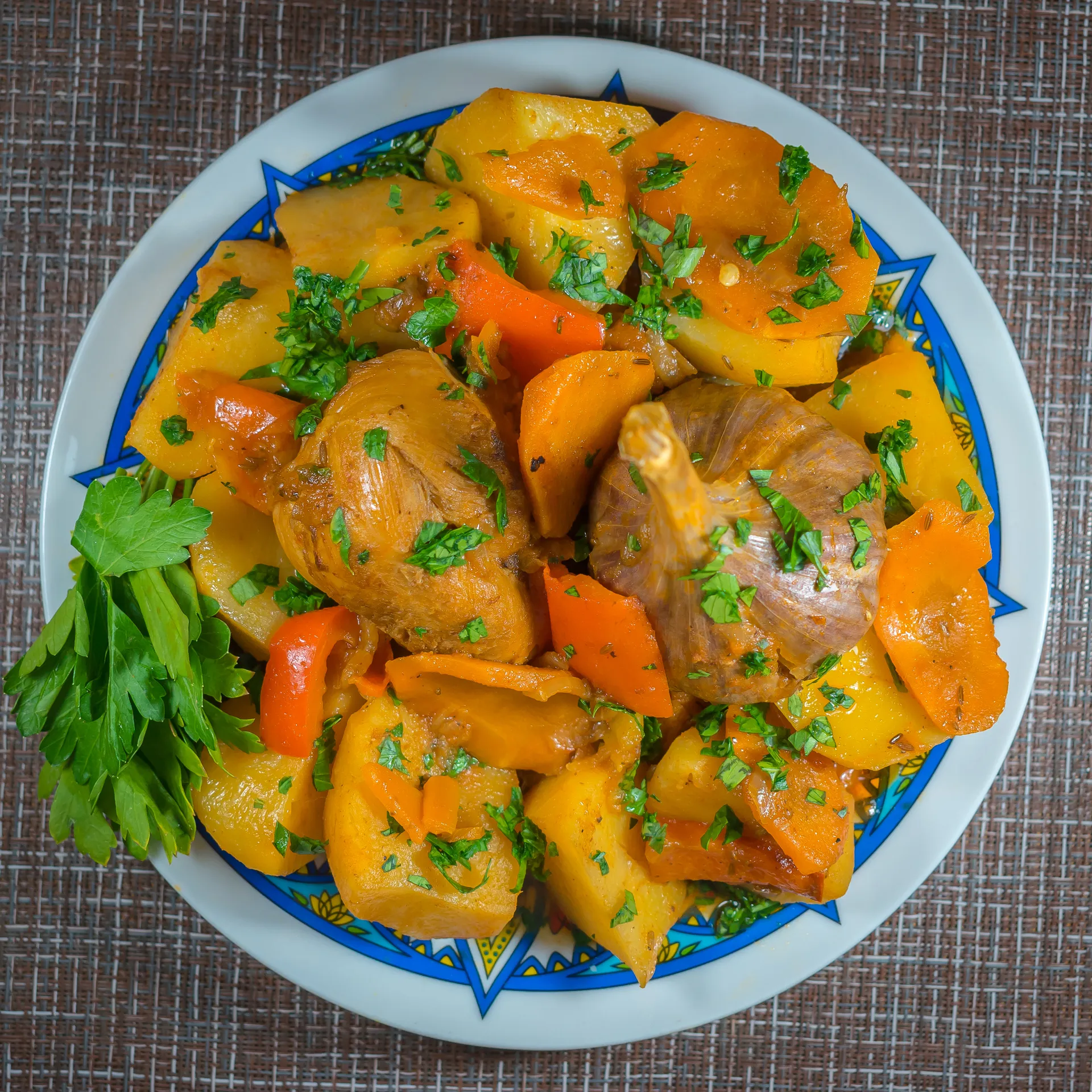
Dimlama
Meat and autumn vegetables stewed slowly in their own juices.
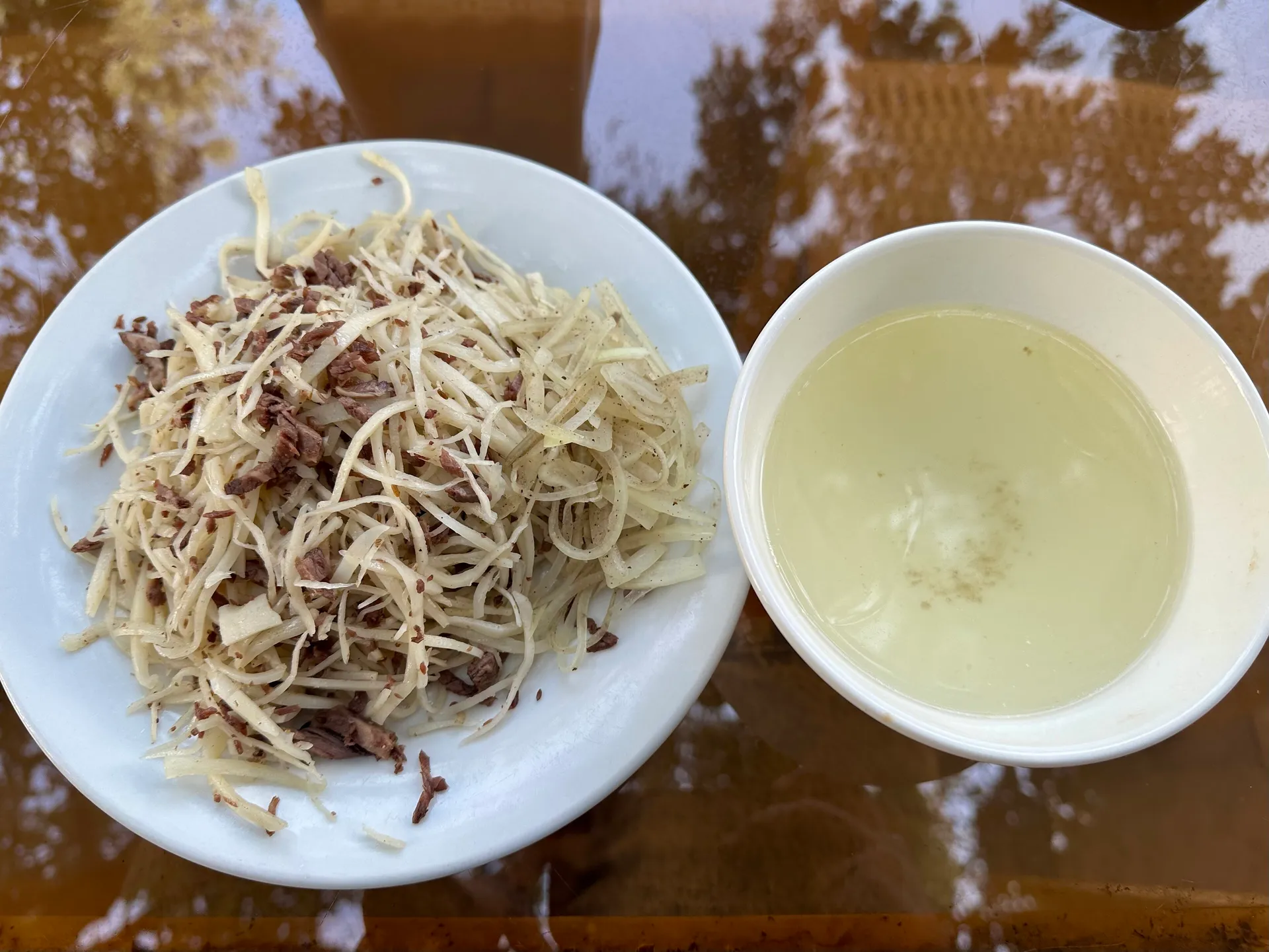
Norin
Hair-thin cold noodles and meat, a Tashkent speciality.
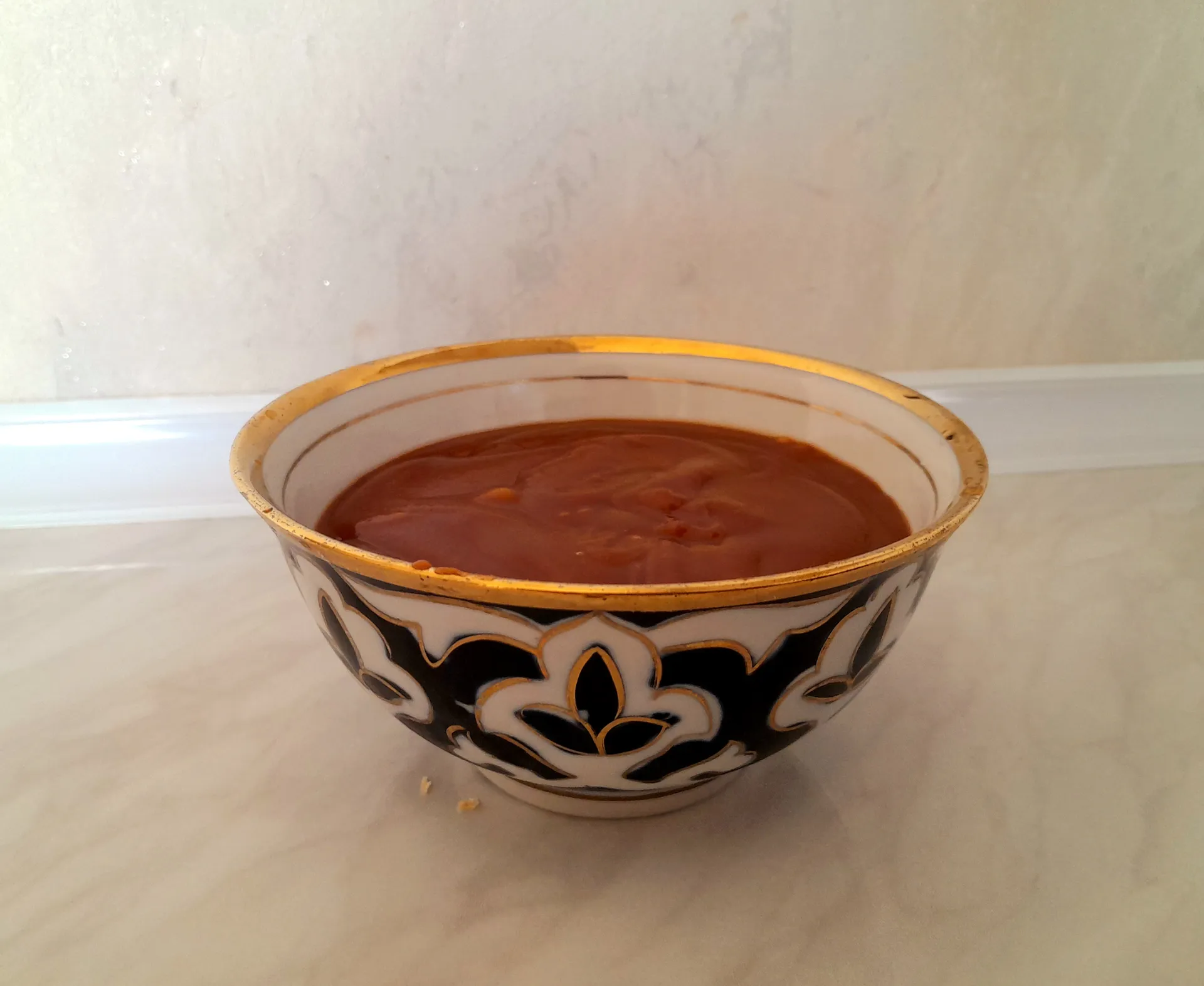
Sumalak
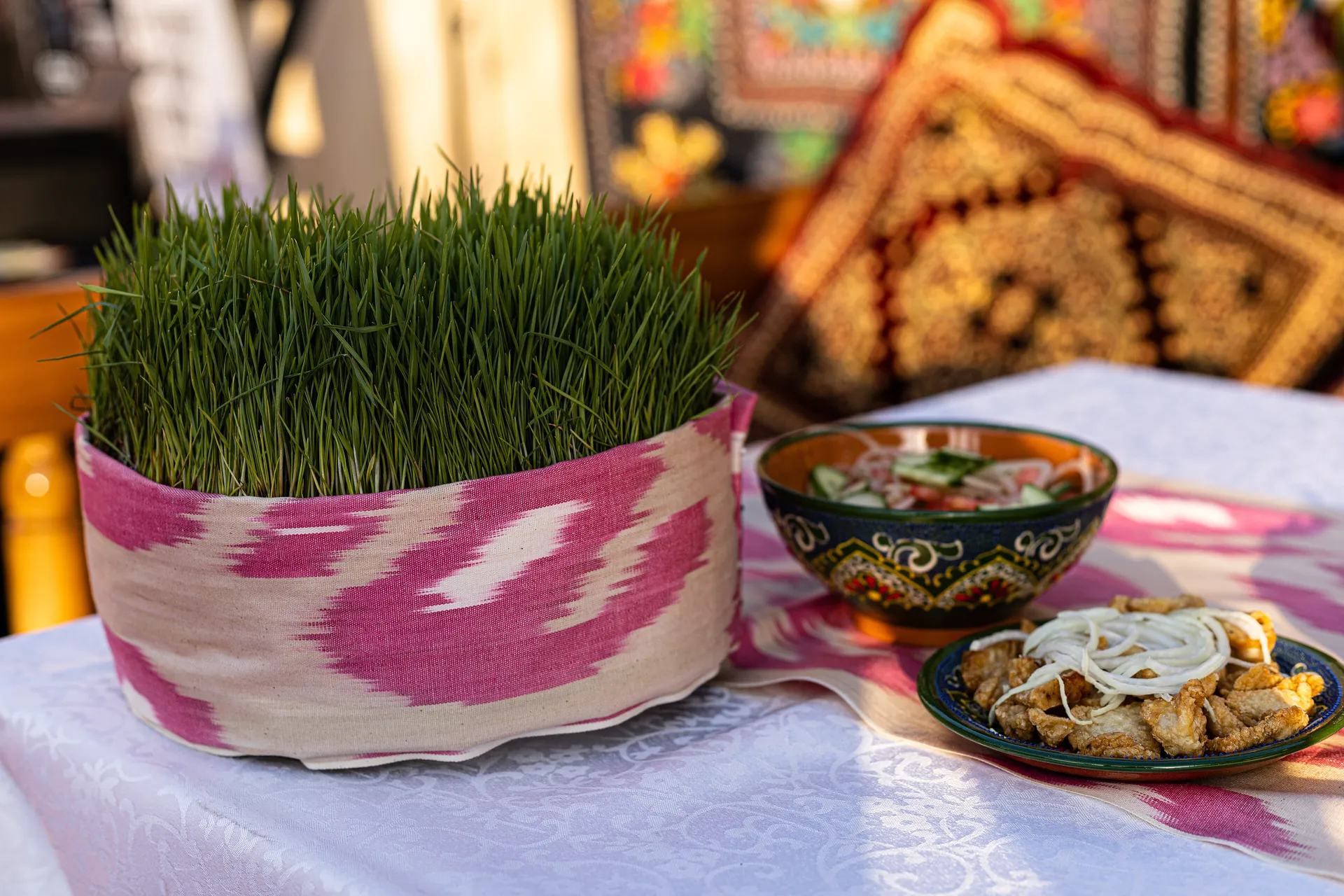
Sprouted-wheat pudding stirred all night for Navruz.
Highlights
- Palov culture and tradition was inscribed on UNESCO's Intangible Cultural Heritage list in 2016
- Osh markazi — dedicated plov halls — cook hundreds of portions from a single kazan and usually sell out before 2pm
- The chekich bread stamp is both ornament and engineering: it keeps the centre of the loaf flat
- Devzira rice from the Fergana Valley is aged before sale and costs several times the price of ordinary rice